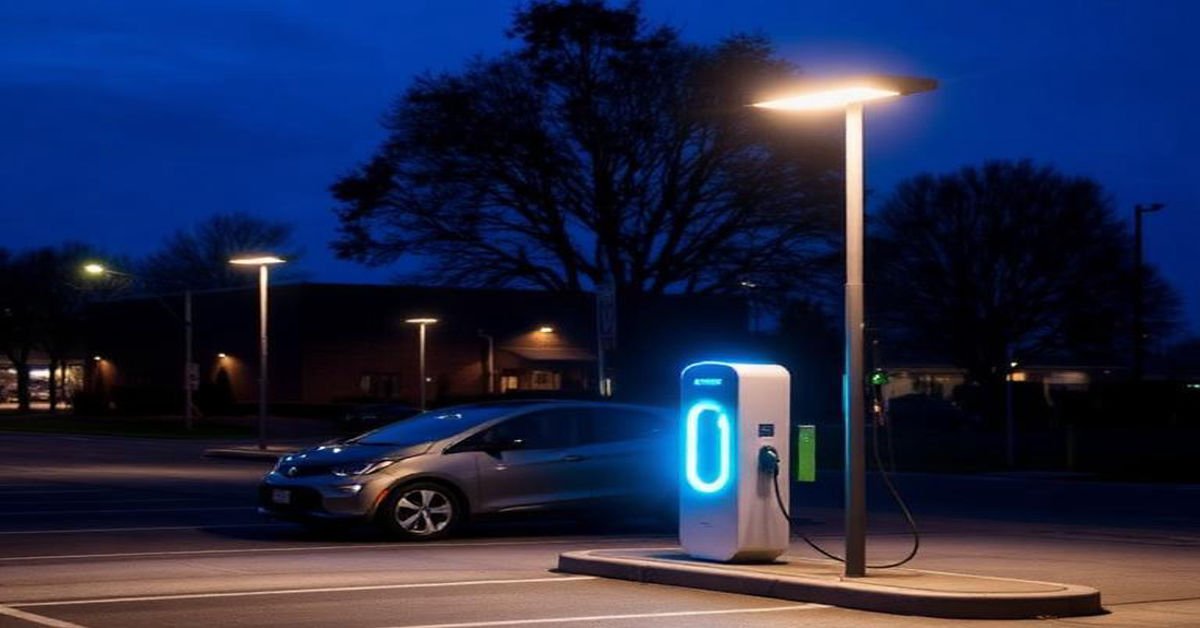
Lamppost EV Charging in the USA are rapidly becoming a central part of the United States’ transportation future. As automakers accelerate production and governments push for lower emissions, one critical challenge remains: accessible and convenient EV charging infrastructure. While home chargers and fast-charging stations dominate the conversation, a quieter but highly promising solution is emerging in cities across the country — lamppost EV charging.
Lamppost EV charging involves converting existing streetlights into electric vehicle charging points. This approach leverages existing urban infrastructure, reduces installation costs, and expands charging access for drivers who do not have private parking. As U.S. cities look for efficient, space-saving, and cost-effective charging solutions, lamppost chargers are increasingly seen as a practical answer.
This article explores how lamppost EV charging works in the USA, where it is being deployed, its benefits and limitations, policy support, technology involved, and its long-term impact on America’s EV ecosystem.
What Is Lamppost EV Charging?
Lamppost EV charging refers to the integration of EV charging outlets into existing streetlight poles. Instead of building new standalone charging stations, municipalities retrofit lampposts with electrical connections, metering systems, and charging hardware.
These chargers are typically Level 2 AC chargers, delivering slower but steady power suitable for overnight or long-duration parking. They are especially useful in residential neighborhoods where vehicles are parked for several hours.
Key features of lamppost EV charging include:
-
Use of existing electrical grid connections
-
Minimal street disruption during installation
-
Compact and visually unobtrusive design
-
Compatibility with common EV charging standards
This model is particularly appealing in dense urban areas where installing large charging stations is expensive or impractical.
Why Lamppost Charging Matters in the USA
The United States faces a unique EV charging challenge. While suburban homeowners often have access to garages and driveways, millions of Americans live in apartments or urban housing without private parking.
According to U.S. transportation data, nearly 40% of urban households lack off-street parking, making home EV charging difficult or impossible. Lamppost chargers directly address this issue by bringing charging access to where people already park.
Lamppost EV charging supports:
-
Urban EV adoption
-
Equitable access to charging infrastructure
-
Reduced reliance on large public charging hubs
-
More efficient use of public space
For cities aiming to meet climate goals without major infrastructure overhauls, lamppost chargers offer a realistic and scalable solution.
How Lamppost EV Charging Works
Lamppost charging systems are designed to integrate seamlessly with existing streetlight infrastructure. While designs vary by provider, the basic setup follows a common process.
Step-by-step operation:
-
The lamppost is upgraded with EV charging hardware
-
Electrical capacity is assessed and, if needed, enhanced
-
A charging socket or tethered cable is installed
-
Users activate charging via a mobile app, RFID card, or QR code
-
Energy usage is tracked and billed digitally
Many systems are also connected to smart city platforms, allowing municipalities to monitor usage, manage load balancing, and schedule maintenance.
Major US Cities Exploring Lamppost EV Charging
Although lamppost EV charging is more established in Europe, several U.S. cities have begun pilot programs and limited deployments.
Examples of US lamppost EV charging initiatives include:
-
New York City: Pilot curbside charging projects in residential neighborhoods
-
Los Angeles: Streetlight-based chargers combined with smart grid systems
-
San Francisco: Integration with existing curbside parking infrastructure
-
Seattle: Neighborhood charging pilots focused on equity and access
-
Boston: Testing streetlight retrofits in dense residential zones
These programs are still in early stages, but initial results show strong interest from residents who lack home charging options.
Key Benefits of Lamppost EV Charging
Lamppost EV charging offers multiple advantages for cities, utilities, and EV drivers alike.
Cost Efficiency
Installing new charging stations often requires trenching, electrical upgrades, and permits. Lamppost chargers significantly reduce these costs by using existing infrastructure.
Faster Deployment
Because lampposts already exist, installation can be completed in days rather than months, allowing cities to scale charging networks more quickly.
Urban Space Optimization
Cities avoid cluttering sidewalks and parking areas with bulky equipment, preserving public space and aesthetics.
Support for Overnight Charging
Lamppost chargers are ideal for overnight or long-term parking, reducing demand at fast-charging stations during peak hours.
Environmental Impact
By encouraging EV adoption, lamppost charging contributes to lower emissions and improved air quality in urban areas.
Comparison: Lamppost Charging vs Traditional Public Chargers
| Feature | Lamppost EV Charging | Standalone Public Chargers |
|---|---|---|
| Installation cost | Low to moderate | High |
| Deployment speed | Fast | Slow |
| Charging speed | Level 2 (slow) | Level 2 or DC fast |
| Space requirement | Minimal | Significant |
| Best use case | Residential streets | Commercial & highway areas |
| Visual impact | Low | Moderate to high |
This comparison highlights why lamppost chargers are best viewed as complementary, not a replacement, for traditional charging stations.
Technology Behind Lamppost EV Charging
Modern lamppost charging systems rely on advanced technology to ensure safety, reliability, and efficiency.
Core technologies include:
-
Smart metering for accurate billing
-
Load management to prevent grid overload
-
Weather-resistant charging hardware
-
Cloud-based monitoring platforms
-
Mobile apps for user access and payments
Some systems also integrate renewable energy credits or off-peak pricing to encourage sustainable charging behavior.
Policy and Government Support in the USA
Federal and state governments play a crucial role in expanding EV infrastructure. Programs such as the National Electric Vehicle Infrastructure (NEVI) Formula Program and state-level clean energy initiatives indirectly support lamppost charging by funding urban charging solutions.
Policy support areas include:
-
Grants for curbside charging pilots
-
Utility incentives for smart charging systems
-
Local zoning reforms to allow curbside chargers
-
Public-private partnerships with charging providers
As regulations evolve, lamppost EV charging is expected to receive clearer guidelines and broader funding support.
Challenges and Limitations
Despite its promise, lamppost EV charging is not without challenges.
Limited Charging Speed
Lamppost chargers are typically slower than DC fast chargers, making them unsuitable for rapid charging needs.
Grid Capacity Constraints
Older streetlight circuits may require upgrades to support EV charging loads.
Parking Management Issues
Ensuring fair access and preventing non-EV vehicles from blocking chargers remains a challenge.
Standardization
Different cities and providers use varying systems, which can confuse users without consistent standards.
Addressing these issues will be essential for widespread adoption.
User Experience and Public Acceptance
Early feedback from EV drivers in U.S. pilot cities has been largely positive. Drivers appreciate the convenience of charging near home and the ability to integrate charging into daily routines.
Common user benefits reported:
-
Reduced range anxiety
-
No need for long charging trips
-
Lower charging costs compared to fast chargers
-
Improved confidence in switching to EVs
Public education and clear signage are critical to improving acceptance and proper use.
Role of Utilities and Private Companies
Utilities and private charging companies play a key role in lamppost EV charging deployment.
Their responsibilities include:
-
Assessing grid readiness
-
Managing energy distribution
-
Providing charging software platforms
-
Handling maintenance and customer support
Partnerships between cities, utilities, and private firms are emerging as the most effective deployment model.
Future of Lamppost EV Charging in the USA
As EV adoption accelerates, lamppost charging is expected to expand significantly. Industry analysts predict that curbside and streetlight charging could account for a substantial share of urban charging infrastructure over the next decade.
Future developments may include:
-
Faster Level 2 charging speeds
-
Integration with renewable energy sources
-
Dynamic pricing based on demand
-
AI-driven load balancing
-
Nationwide interoperability standards
With continued policy support and technological advancement, lamppost EV charging could become a common sight on American streets.
Conclusion
Lamppost EV charging represents a smart, efficient, and inclusive approach to expanding electric vehicle infrastructure in the United States. By leveraging existing streetlight networks, cities can provide accessible charging to residents who need it most, while minimizing costs and urban disruption.
Although not a replacement for fast-charging stations, lamppost chargers fill a critical gap in residential and urban EV charging. As technology improves and policy frameworks mature, lamppost EV charging is poised to play a vital role in America’s clean transportation future.
1 thought on “Lamppost EV Charging in the USA”