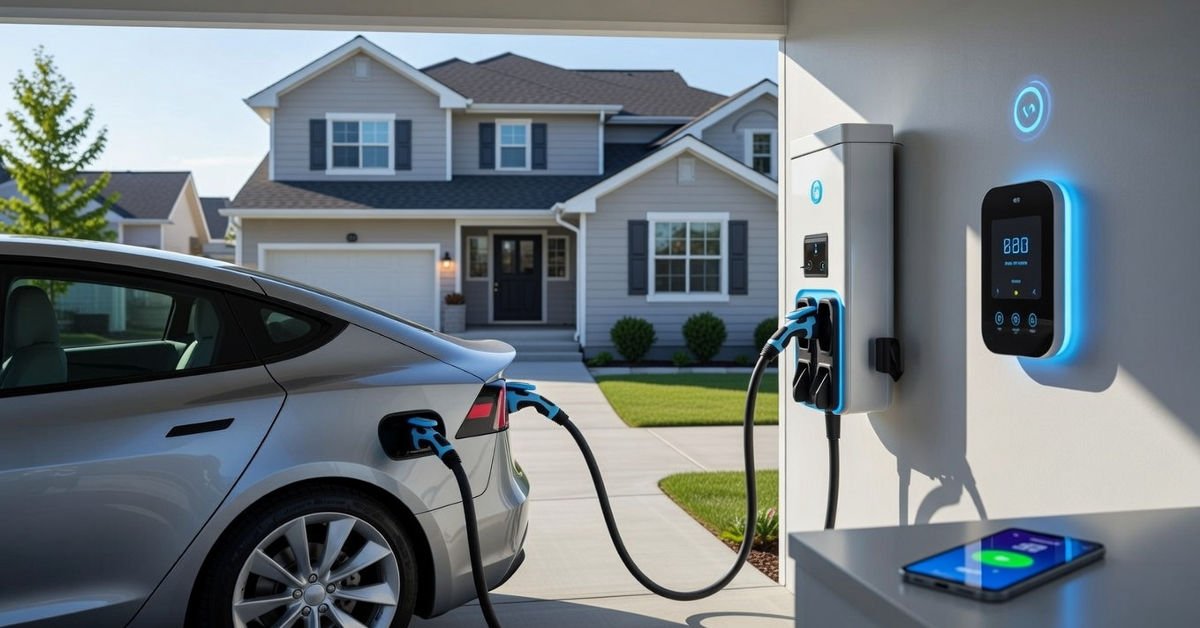
The electric vehicle (EV) revolution in the United States is no longer a future trend—it is already shaping how households consume and manage energy. As more Americans switch to electric cars, the focus is moving beyond simply owning an EV to charging it smarter at home. This is where smart home EV charging in the USA becomes highly relevant.
Understanding Smart Home EV Charging
Smart home EV charging refers to the use of intelligent charging stations that connect with home networks, mobile apps, and energy management systems. Unlike basic chargers that simply supply power, smart chargers can schedule charging, monitor electricity usage, optimize energy costs, and integrate with solar panels or smart grids.
In the USA, smart EV chargers are becoming common as utilities encourage off-peak charging and energy efficiency. These systems give homeowners flexibility and control over how and when their vehicles charge.
Why Smart Home EV Charging Is Growing in the USA
Several factors are driving the rapid adoption of smart home EV charging across the United States:
-
Rising EV ownership nationwide
-
Higher electricity awareness and utility pricing models
-
Expansion of smart home ecosystems
-
Government incentives promoting clean energy
-
Increased demand for energy independence
Smart charging aligns well with American lifestyles, where detached homes, garages, and renewable energy adoption are common.
How Smart EV Chargers Work at Home
A smart EV charger operates by combining hardware and software. The charger connects to your home’s electrical system and communicates with a mobile app or web dashboard.
Key operational features include:
-
Real-time monitoring of power usage
-
Automatic scheduling during off-peak hours
-
Remote start and stop controls
-
Charging history and energy reports
-
Grid and solar integration
These features transform a simple charging task into a fully optimized energy process.
Types of Smart Home EV Chargers Used in the USA
| Charger Type | Power Level | Best For | Typical Charging Time |
|---|---|---|---|
| Level 1 Smart Charger | Low (120V) | Apartments, light usage | 20–40 hours |
| Level 2 Smart Charger | Medium (240V) | Most US homes | 6–10 hours |
| Smart Bi-Directional Charger | Advanced | Energy-aware homes | Variable |
Level 2 smart chargers dominate the US market due to their balance of speed, affordability, and compatibility with residential electrical systems.
Smart Charging vs Traditional Home Charging
| Feature | Traditional Charger | Smart EV Charger |
|---|---|---|
| App Control | No | Yes |
| Scheduled Charging | No | Yes |
| Energy Tracking | No | Yes |
| Utility Integration | No | Yes |
| Solar Compatibility | Limited | High |
Smart chargers offer significantly more value over time, especially for homeowners concerned about electricity costs and sustainability.
Benefits of Smart Home EV Charging in the USA
Lower Electricity Costs
Many US utilities charge less during off-peak hours. Smart chargers automatically schedule charging when rates are lowest, reducing monthly bills.
Better Energy Efficiency
Smart systems prevent overloading and distribute power efficiently across household appliances.
Convenience and Automation
Homeowners can control charging from anywhere using mobile apps, making EV ownership stress-free.
Solar and Renewable Integration
Smart chargers can prioritize solar energy, helping homeowners maximize renewable power usage.
Future-Ready Technology
Smart chargers are designed to adapt to evolving energy grids and electric vehicle technology.
Smart Home EV Charging and Solar Power
Solar energy integration is one of the strongest advantages of smart EV charging in the USA. Homes equipped with rooftop solar panels can use smart chargers to:
-
Charge vehicles using excess solar energy
-
Reduce dependence on the electrical grid
-
Store energy efficiently
-
Lower long-term energy costs
| Feature | Without Smart Charging | With Smart Charging |
|---|---|---|
| Solar Utilization | Partial | Optimized |
| Grid Dependence | High | Reduced |
| Energy Wastage | Possible | Minimal |
This combination is especially popular in states with strong solar adoption.
Role of Utilities in Smart EV Charging
US utility companies actively support smart EV charging by offering incentives, rebates, and time-of-use pricing. Smart chargers communicate with utility systems to help stabilize the grid during peak demand.
Common utility-supported features include:
-
Demand response programs
-
Load balancing
-
Off-peak pricing optimization
This cooperation benefits both homeowners and energy providers.
Installation Requirements for Smart Home EV Chargers
Before installing a smart EV charger, homeowners should consider:
-
Electrical panel capacity
-
Dedicated circuit availability
-
Internet connectivity (Wi-Fi or Ethernet)
-
Local building codes and permits
| Requirement | Typical US Standard |
|---|---|
| Voltage | 240V |
| Breaker Size | 40–60 amps |
| Installation Time | 2–6 hours |
Professional installation ensures safety, compliance, and optimal performance.
Smart Home Integration and Automation
Smart EV chargers integrate seamlessly with modern smart homes. Homeowners can connect chargers to:
-
Smart energy monitors
-
Home automation systems
-
Voice assistants
-
Energy management dashboards
This integration allows automated energy decisions, such as delaying EV charging when household demand is high.
Cybersecurity and Data Privacy Considerations
Smart chargers rely on internet connectivity, making cybersecurity an important consideration. Reputable systems include:
-
Encrypted data transmission
-
Secure cloud storage
-
User authentication controls
-
Regular software updates
Homeowners should always keep firmware updated and use strong network security practices.
Environmental Impact of Smart EV Charging
Smart home EV charging supports sustainability goals by:
-
Reducing peak grid demand
-
Encouraging renewable energy use
-
Lowering household carbon footprints
-
Supporting cleaner transportation
When combined with renewable energy, smart EV charging becomes one of the most eco-friendly transportation solutions available in the USA.
Cost of Smart Home EV Charging in the USA
| Cost Category | Estimated Range |
|---|---|
| Smart Charger Unit | $400 – $900 |
| Installation | $300 – $1,200 |
| Permits & Upgrades | $0 – $2,000 |
| Annual Maintenance | Minimal |
Although initial costs can be higher than basic chargers, long-term savings often outweigh upfront expenses.
Government Incentives and Rebates
Federal, state, and local incentives in the USA often support smart EV charging installations. Benefits may include:
-
Tax credits
-
Utility rebates
-
Clean energy grants
-
Reduced installation costs
Eligibility varies by location and program, but incentives significantly reduce overall investment.
Smart Charging for Multi-Vehicle Households
Households with more than one EV benefit greatly from smart charging systems. Smart chargers can:
-
Balance charging loads
-
Prioritize vehicles
-
Prevent circuit overloads
-
Optimize energy usage
This flexibility makes EV ownership scalable and practical for American families.
Challenges and Limitations
While smart home EV charging offers many benefits, some challenges exist:
-
Higher upfront cost
-
Internet dependency
-
Learning curve for new users
-
Compatibility variations
However, ongoing improvements continue to address these limitations.
Future of Smart Home EV Charging in the USA
The future of smart EV charging includes:
-
Vehicle-to-home energy sharing
-
AI-based energy optimization
-
Deeper grid integration
-
Fully autonomous charging schedules
As EV adoption grows, smart charging will become a standard home feature rather than a luxury.
Choosing the Right Smart EV Charger for Your Home
When selecting a charger, homeowners should evaluate:
-
Charging speed needs
-
Home electrical capacity
-
Smart features required
-
Long-term energy goals
| Selection Factor | Why It Matters |
|---|---|
| Power Rating | Determines charging speed |
| App Quality | Controls usability |
| Utility Support | Enables cost savings |
| Warranty | Ensures reliability |
Conclusion
Smart home EV charging in the USA represents the next step in electric vehicle ownership. It offers cost savings, convenience, sustainability, and future-ready technology for modern households. As electricity pricing evolves and renewable energy adoption grows, smart charging ensures that EV owners remain in control of both their vehicles and their energy consumption.