Introduction
In recent years, businesses across the United States have begun rethinking how they manage their supply chains. Global disruptions such as pandemics, geopolitical tensions, shipping delays, and rising transportation costs exposed vulnerabilities in heavily international sourcing strategies. As a result, many companies are turning their attention toward domestic sourcing — the practice of procuring materials, components, and services from suppliers within the country.
Domestic sourcing is no longer just a patriotic choice; it has become a strategic business decision. Organizations now recognize that resilient supply chains can protect operations, enhance product quality, reduce risk, and improve long-term profitability.
This comprehensive guide explores domestic sourcing in the USA, why it matters, its benefits and challenges, industry adoption trends, and how businesses can successfully transition toward local procurement strategies.
What is Domestic Sourcing?
Domestic sourcing refers to the process of purchasing goods, raw materials, or services from suppliers located within the same country where a business operates. Instead of relying on overseas manufacturers, companies partner with local vendors to meet production and operational needs.
This strategy plays a critical role in supply chain management by reducing dependency on international logistics networks that are often affected by tariffs, customs delays, and global economic shifts.
Key Characteristics of Domestic Sourcing
| Feature | Description |
|---|---|
| Local Procurement | Materials and products are sourced from within national borders |
| Faster Delivery | Reduced shipping times compared to overseas suppliers |
| Regulatory Compliance | Easier adherence to national labor and environmental laws |
| Improved Transparency | Better visibility into supplier operations |
| Economic Support | Helps strengthen local industries and job creation |
Domestic sourcing is especially important in sectors such as manufacturing, healthcare, defense, food production, and technology, where supply continuity is essential.
Why Domestic Sourcing is Gaining Momentum in the USA
The shift toward domestic sourcing did not happen overnight. Several economic and operational factors have contributed to its rapid adoption.
1. Supply Chain Disruptions Highlighted Risk
When global shipping slowed during major crises, businesses faced inventory shortages that halted production lines. Companies learned that relying solely on overseas partners created single points of failure.
Domestic suppliers offer proximity, enabling faster adjustments when demand changes unexpectedly.
2. Rising Freight and Logistics Costs
International shipping costs have fluctuated dramatically over the past decade. Fuel price volatility, port congestion, and container shortages made importing goods more expensive than many businesses anticipated.
By sourcing locally, companies can stabilize transportation expenses and forecast budgets more accurately.
3. Increased Focus on Supply Chain Resilience
Resilience means the ability to withstand disruption and recover quickly. Domestic sourcing supports this by shortening supply routes and allowing companies to collaborate closely with suppliers.
4. Consumer Preference for “Made in USA”
Modern consumers are increasingly conscious of product origin. Many associate domestically produced goods with higher quality, ethical labor practices, and environmental responsibility.
Businesses that emphasize local sourcing often gain stronger brand trust.
Domestic vs Global Sourcing: A Strategic Comparison
Understanding the differences between domestic and global sourcing helps organizations choose the right balance for their operations.
| Criteria | Domestic Sourcing | Global Sourcing |
|---|---|---|
| Lead Time | Shorter | Longer due to shipping |
| Cost Structure | Sometimes higher upfront | Often lower manufacturing costs |
| Risk Exposure | Lower geopolitical risk | Higher exposure to global disruptions |
| Quality Control | Easier oversight | Requires remote management |
| Communication | Faster and clearer | Time zone and language barriers |
| Sustainability | Reduced carbon footprint | Higher transportation emissions |
Many companies now adopt a hybrid sourcing strategy, combining domestic reliability with selective international partnerships.
Major Benefits of Domestic Sourcing
Enhanced Supply Chain Stability
Local sourcing reduces dependency on complex global shipping networks. When suppliers operate nearby, businesses can respond quickly to changes in demand.
This stability is particularly valuable for industries with tight production schedules.
Faster Time-to-Market
Shorter transportation routes translate into faster product launches. Companies can test new products, gather feedback, and refine offerings more efficiently.
Speed has become a competitive advantage in markets driven by innovation.
Improved Product Quality
Working closely with domestic suppliers allows for regular inspections, better communication, and stronger quality assurance processes.
Manufacturers can address issues immediately instead of waiting weeks for international shipments.
Stronger Collaboration and Innovation
Geographic proximity encourages partnerships rather than transactional relationships. Businesses can collaborate with suppliers on product design, material improvements, and manufacturing techniques.
Innovation often thrives when teams can interact frequently.
Support for the National Economy
Domestic sourcing contributes to job creation, workforce development, and industrial growth. When companies invest locally, entire economic ecosystems benefit.
Better Regulatory Compliance
US suppliers must adhere to strict labor laws, environmental standards, and safety regulations. This reduces reputational risks associated with unethical sourcing practices.
Challenges Businesses Must Consider
While domestic sourcing offers compelling advantages, it is not without obstacles.
Higher Production Costs
Labor and operational expenses in the United States are typically higher than in developing economies. Businesses must evaluate whether the long-term benefits outweigh the immediate cost increase.
Limited Supplier Availability
Certain specialized components may not have enough domestic manufacturers. Companies may need to invest in supplier development or diversify sourcing channels.
Capacity Constraints
Local suppliers sometimes struggle to scale quickly during periods of rapid demand growth.
Transition Complexity
Shifting from global to domestic sourcing requires careful planning, contract renegotiation, and logistics adjustments.
| Challenge | Business Impact | Possible Solution |
|---|---|---|
| Higher Costs | Reduced margins | Automate processes, negotiate long-term contracts |
| Supplier Gaps | Production delays | Develop regional supplier networks |
| Scaling Issues | Inventory shortages | Maintain safety stock |
| Transition Risk | Operational disruption | Implement phased sourcing strategy |
Industries Leading the Domestic Sourcing Movement
Several sectors in the USA are actively prioritizing local supply chains.
Manufacturing
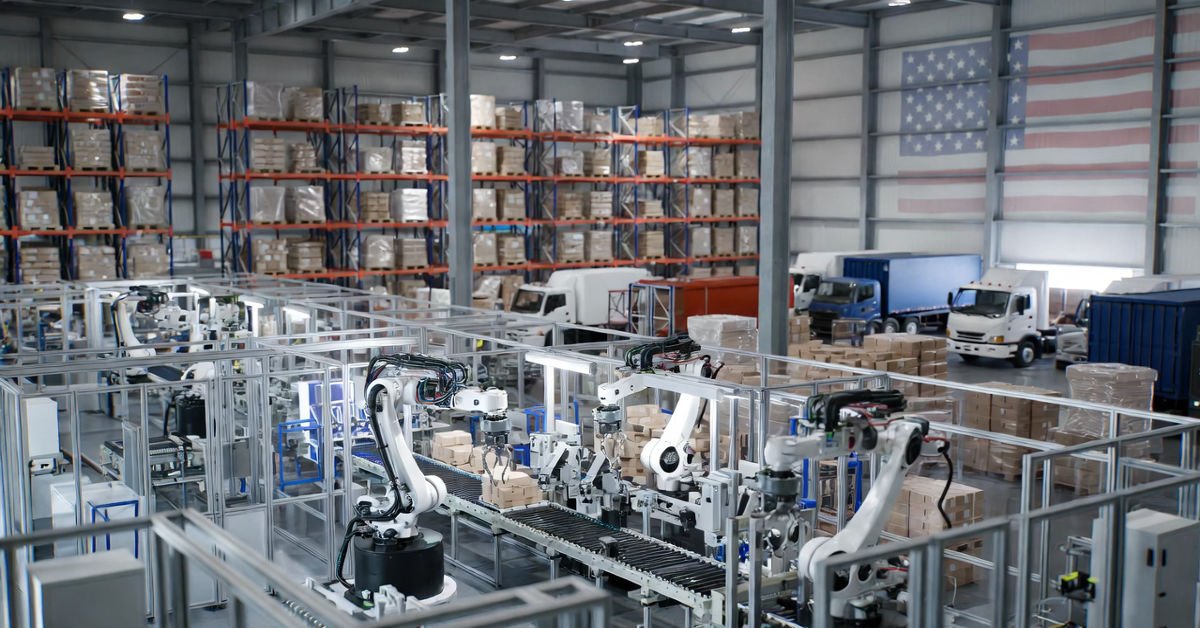
Advanced manufacturing technologies such as robotics and AI have made domestic production more cost-effective. Companies now see reshoring as a viable strategy.
Healthcare and Pharmaceuticals
Medical supply shortages highlighted the importance of domestic production. Hospitals and healthcare providers increasingly prefer locally manufactured equipment and medications.
Automotive
The shift toward electric vehicles has encouraged regional supply ecosystems for batteries and components.
Food and Agriculture
Consumers favor locally sourced food for freshness and sustainability. Shorter supply chains also reduce spoilage.
Technology
Semiconductor and electronics manufacturing initiatives aim to strengthen national security and reduce reliance on foreign production.
| Industry | Reason for Domestic Shift |
|---|---|
| Manufacturing | Automation reduces cost gap |
| Healthcare | Need for reliable medical supplies |
| Automotive | Regional EV ecosystems |
| Food | Demand for freshness and traceability |
| Technology | Strategic and security concerns |
Government Support and Policy Influence
Public policy has played a significant role in encouraging domestic sourcing.
Federal and state programs offer incentives such as tax credits, grants, and infrastructure investments to companies that manufacture locally.
Procurement policies also prioritize domestically produced materials for government projects, creating steady demand for local suppliers.
These initiatives help reduce the financial barriers associated with reshoring operations.
Technology as a Catalyst for Domestic Supply Chains
Modern technology is transforming how businesses manage sourcing.
Digital Supply Chain Platforms
Real-time analytics provide visibility into inventory levels, supplier performance, and transportation metrics.
Automation and Smart Manufacturing
Robotics reduce reliance on manual labor, narrowing the cost difference between domestic and overseas production.
Predictive Analytics
AI-driven forecasting helps companies anticipate demand spikes and adjust sourcing strategies proactively.
Blockchain for Transparency
Secure digital ledgers enhance traceability, ensuring authenticity and compliance throughout the supply chain.
Technology empowers businesses to operate domestic networks with efficiency comparable to global systems.
Sustainability and Environmental Impact
Domestic sourcing aligns with corporate sustainability goals.
Shorter transportation distances reduce greenhouse gas emissions. Local production also enables better monitoring of environmental practices.
Consumers increasingly reward brands that demonstrate responsible sourcing.
Organizations pursuing ESG (Environmental, Social, and Governance) objectives often view domestic sourcing as a practical step toward achieving sustainability targets.
Risk Management Advantages
Risk mitigation has become a boardroom priority.
Domestic supply chains allow companies to:
-
Reduce exposure to trade conflicts
-
Avoid unpredictable tariff changes
-
Minimize shipping disruptions
-
Improve disaster response capabilities
A diversified sourcing strategy that includes domestic partners acts as a safeguard against uncertainty.
How Businesses Can Successfully Implement Domestic Sourcing
Transitioning requires more than selecting a nearby supplier. It demands a strategic approach.
Step 1: Conduct a Supply Chain Audit
Identify which components carry the highest risk when sourced internationally.
Step 2: Calculate Total Cost of Ownership
Look beyond unit price. Include shipping, duties, delays, and quality risks.
Step 3: Build Supplier Relationships
Long-term partnerships encourage reliability and innovation.
Step 4: Start with a Hybrid Model
Gradually increase domestic procurement while maintaining essential global suppliers.
Step 5: Invest in Technology
Digital tools enhance coordination and performance tracking.
| Implementation Step | Objective |
|---|---|
| Audit Supply Chain | Identify vulnerabilities |
| Analyze Costs | Understand true financial impact |
| Partner Locally | Improve reliability |
| Adopt Hybrid Model | Maintain flexibility |
| Use Technology | Optimize operations |
The Role of Small and Medium Businesses
Domestic sourcing is not limited to large corporations. Small and medium enterprises (SMEs) often benefit even more from local supplier networks.
Closer relationships allow for flexible order sizes, faster communication, and collaborative problem-solving.
Additionally, supporting regional suppliers strengthens community economies.
Future Trends in Domestic Supply Chains
Several emerging trends suggest that domestic sourcing will remain a long-term priority.
Reshoring Acceleration
More companies are bringing manufacturing back to US soil to ensure continuity.
Regional Micro Supply Chains
Localized production hubs reduce dependency on distant facilities.
Increased Automation
Technology will continue narrowing cost differences.
Strategic Inventory Models
Businesses are balancing lean inventory with resilience-focused stock levels.
Supplier Diversification
Organizations are avoiding reliance on a single region.
These trends indicate a structural transformation rather than a temporary adjustment.
Domestic Sourcing and Competitive Advantage
Companies that invest in resilient supply chains position themselves for sustainable growth.
Benefits include:
-
Greater operational control
-
Faster innovation cycles
-
Improved customer satisfaction
-
Enhanced brand reputation
In uncertain economic environments, reliability often matters more than minimal cost savings.
Expert Perspective: Why Balance Matters
While domestic sourcing is powerful, experts recommend avoiding extreme strategies.
Over-localization can limit cost competitiveness, while over-globalization increases risk.
The most successful organizations strike a balance — leveraging domestic suppliers for critical operations while maintaining selective global partnerships.
Strategic flexibility is the hallmark of modern supply chain leadership.
Conclusion
Domestic sourcing in the USA has evolved from a reactive measure into a forward-looking business strategy. Companies are no longer focused solely on cost reduction; they are prioritizing resilience, transparency, sustainability, and long-term value.
Although challenges such as higher production expenses and supplier limitations exist, the advantages often outweigh the drawbacks when viewed through a strategic lens.
Organizations that thoughtfully integrate domestic sourcing into their supply chain frameworks can better navigate uncertainty, respond to market shifts, and build stronger connections with customers.