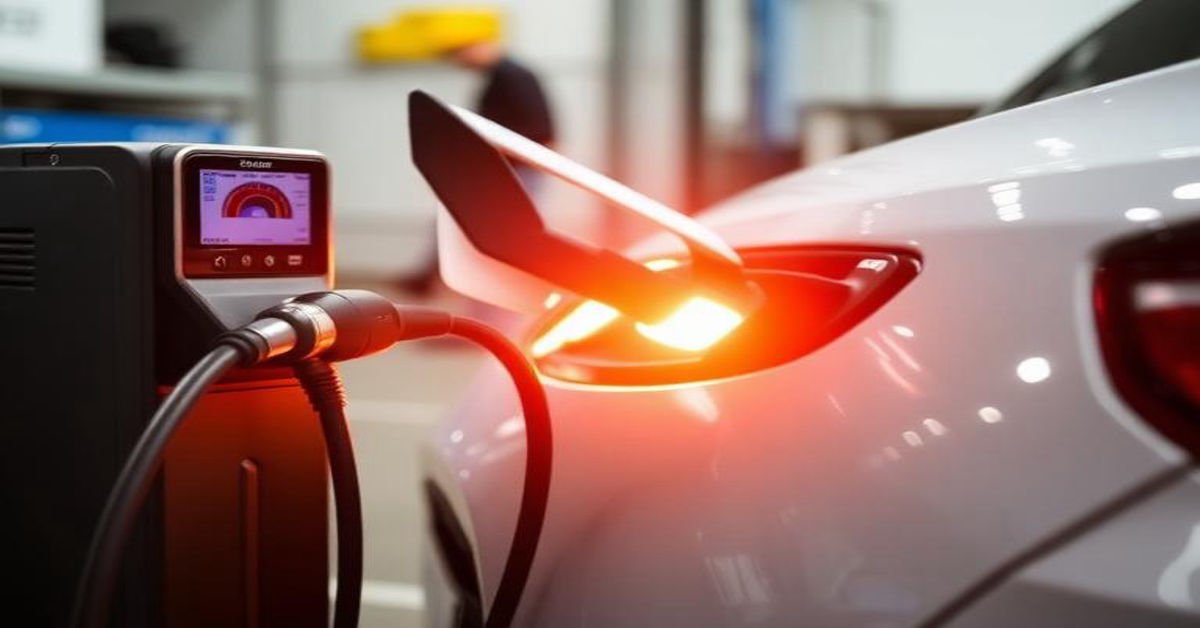
Electric vehicles (EVs) are rapidly reshaping the global transportation ecosystem, and at the heart of this transformation lies the battery system. While battery capacity and charging speed often dominate headlines, EV battery testing and diagnostics play an equally critical role in ensuring vehicle safety, performance consistency, and long-term durability. Without accurate testing and intelligent diagnostics, even the most advanced battery chemistry cannot deliver its promised value.
This comprehensive guide explores how EV battery testing and diagnostics work, why they matter, the technologies involved, and how they influence consumer confidence, regulatory compliance, and future innovation.
Understanding EV Battery Systems
An EV battery is not a single unit but a complex system composed of cells, modules, packs, thermal management systems, power electronics, and software controls. Each component must operate flawlessly under diverse environmental and driving conditions.
Battery testing and diagnostics are designed to validate these components throughout the battery lifecycle—from research and development to mass production, daily operation, and end-of-life assessment.
Why EV Battery Testing and Diagnostics Matter
Battery failures can lead to reduced range, unexpected shutdowns, safety hazards, and costly recalls. Robust testing and diagnostics help manufacturers and fleet operators prevent these risks while improving customer trust.
Key benefits include:
-
Enhanced safety and thermal stability
-
Accurate state-of-health estimation
-
Optimized charging and discharging behavior
-
Extended battery lifespan
-
Regulatory and warranty compliance
From an end-user perspective, effective diagnostics translate into predictable performance and lower ownership costs.
Stages of EV Battery Testing
EV battery testing occurs at multiple stages of the battery’s lifecycle. Each stage serves a distinct purpose and uses specialized methods.
Battery Testing Across the Lifecycle
| Testing Stage | Purpose | Key Outcomes |
|---|---|---|
| Research & Development | Validate chemistry and design | Energy density, degradation patterns |
| Manufacturing | Quality assurance | Cell consistency, defect detection |
| Vehicle Integration | System compatibility | Thermal and electrical stability |
| In-Use Operation | Performance monitoring | State of charge accuracy |
| End-of-Life | Reuse or recycling decisions | Residual capacity analysis |
These stages ensure batteries meet both engineering specifications and real-world expectations.
Core Parameters Measured During Battery Testing
Battery diagnostics rely on a wide range of measurable parameters that reveal both immediate performance and long-term degradation trends.
Key Battery Metrics
| Parameter | Description | Diagnostic Importance |
|---|---|---|
| Voltage | Electrical potential across cells | Detects imbalance or faults |
| Current | Flow of electricity | Monitors load behavior |
| Temperature | Thermal behavior of cells | Prevents thermal runaway |
| Internal Resistance | Opposition to current flow | Indicates aging |
| Capacity | Energy storage capability | Determines usable range |
Monitoring these variables allows early detection of abnormal behavior before it escalates into failure.
Cell-Level Testing and Diagnostics
Cell-level testing is the foundation of battery reliability. Even minor inconsistencies between cells can compromise the entire pack.
Manufacturers perform formation cycling, impedance testing, and capacity verification to ensure each cell meets strict tolerances. Advanced diagnostics also analyze voltage relaxation behavior, which helps predict long-term degradation patterns.
Cell testing is particularly critical for high-energy chemistries such as lithium-nickel-manganese-cobalt (NMC) and lithium-iron-phosphate (LFP).
Module and Pack-Level Testing
Once cells are assembled into modules and packs, testing becomes more complex. Diagnostics must account for inter-cell interactions, thermal gradients, and structural integrity.
Common Pack-Level Tests
-
Mechanical vibration and shock testing
-
Thermal cycling under extreme temperatures
-
High-voltage insulation resistance testing
-
Short-circuit and overcharge simulations
These tests replicate real-world stresses such as rough roads, fast charging, and extreme climates.
Battery Management Systems (BMS) and Diagnostics
The Battery Management System (BMS) is the brain of the EV battery. It continuously monitors battery parameters and makes real-time decisions to protect the system.
Modern BMS platforms integrate diagnostic algorithms that estimate:
-
State of Charge (SoC)
-
State of Health (SoH)
-
Remaining Useful Life (RUL)
By combining sensor data with predictive models, the BMS ensures safe operation while maximizing usable energy.
Advanced Diagnostic Algorithms
Traditional voltage-based methods are no longer sufficient for next-generation EVs. Advanced diagnostics now rely on data-driven and physics-based models.
Diagnostic Model Comparison
| Model Type | Strength | Limitation |
|---|---|---|
| Equivalent Circuit Models | Simple and fast | Limited accuracy |
| Electrochemical Models | High precision | Computationally intensive |
| Machine Learning Models | Adaptive and predictive | Requires large datasets |
Many OEMs now adopt hybrid approaches, combining physical models with AI to achieve both accuracy and efficiency.
On-Board Diagnostics (OBD) for EV Batteries
On-board diagnostics enable real-time monitoring of battery health during vehicle operation. These systems detect anomalies such as voltage imbalance, overheating, or abnormal degradation.
When an issue is identified, the system can:
-
Limit power output
-
Adjust charging speed
-
Notify the driver
-
Log data for service analysis
This proactive approach reduces breakdowns and improves safety.
Thermal Diagnostics and Safety Monitoring
Thermal management is one of the most critical aspects of EV battery safety. Diagnostics continuously assess temperature distribution across the pack.
Uneven heating may indicate:
-
Cooling system blockages
-
Cell defects
-
Overcurrent conditions
By identifying these issues early, manufacturers prevent catastrophic failures such as thermal runaway.
Fast Charging and Diagnostic Challenges
Fast charging introduces additional stress on EV batteries. High currents generate heat and accelerate aging if not properly controlled.
Diagnostics during fast charging monitor:
-
Cell temperature rise rates
-
Voltage deviation between cells
-
Internal resistance changes
These insights help optimize charging protocols without compromising battery longevity.
Predictive Maintenance Through Diagnostics
Predictive diagnostics shift maintenance from reactive to proactive. Instead of waiting for failures, EV operators can schedule service based on battery condition.
Benefits of Predictive Battery Diagnostics
| Benefit | Impact |
|---|---|
| Reduced downtime | Improved fleet efficiency |
| Lower repair costs | Early fault detection |
| Extended battery life | Optimized usage patterns |
| Better resale value | Verified battery health |
This approach is particularly valuable for commercial EV fleets and shared mobility services.
Diagnostics for Used EVs and Second-Life Applications
Battery diagnostics play a key role in the growing used EV market. Buyers increasingly demand transparent battery health reports before purchase.
Accurate diagnostics also enable second-life applications, where retired EV batteries are repurposed for stationary energy storage. Testing determines whether a battery retains sufficient capacity and safety margins for reuse.
Regulatory Standards and Compliance Testing
Global regulations require EV batteries to meet strict safety and performance standards. Diagnostic testing ensures compliance with these frameworks.
Testing often covers:
-
Electrical safety
-
Environmental resilience
-
Abuse tolerance
-
Long-term durability
Compliance not only protects consumers but also strengthens brand credibility.
Role of Digital Twins in Battery Diagnostics
Digital twins are virtual replicas of physical batteries that update in real time using diagnostic data. They allow engineers to simulate aging, predict failures, and test optimization strategies without risking physical assets.
This technology enhances both design validation and in-field diagnostics, reducing development time and operational risks.
Challenges in EV Battery Testing and Diagnostics
Despite technological advances, several challenges remain:
-
Variability in real-world driving conditions
-
Limited access to long-term aging data
-
Trade-offs between diagnostic accuracy and computational cost
-
Data privacy and cybersecurity concerns
Addressing these challenges requires collaboration between automakers, software developers, and research institutions.
Future Trends in EV Battery Diagnostics
The future of EV battery diagnostics is moving toward fully autonomous, self-learning systems.
Emerging trends include:
-
AI-driven health prediction models
-
Cloud-based diagnostic platforms
-
Over-the-air diagnostic updates
-
Integration with vehicle-to-grid systems
These innovations will make batteries smarter, safer, and more efficient throughout their lifecycle.
Consumer Perspective: Why Diagnostics Matter to Drivers
For EV owners, battery diagnostics directly affect daily usability. Accurate range estimation, consistent charging behavior, and early warning alerts create a stress-free driving experience.
Transparent diagnostics also build trust by eliminating uncertainty around battery degradation and replacement costs.
Conclusion: The Backbone of EV Reliability
EV battery testing and diagnostics are fundamental to the success of electric mobility. They ensure safety, unlock performance potential, and extend battery lifespan while supporting sustainability goals.
As EV adoption accelerates worldwide, advanced diagnostics will become not just a technical requirement but a competitive differentiator. Manufacturers that invest in robust testing and intelligent diagnostics will deliver vehicles that are safer, more reliable, and better aligned with consumer expectations.
1 thought on “EV Battery Testing and Diagnostics”