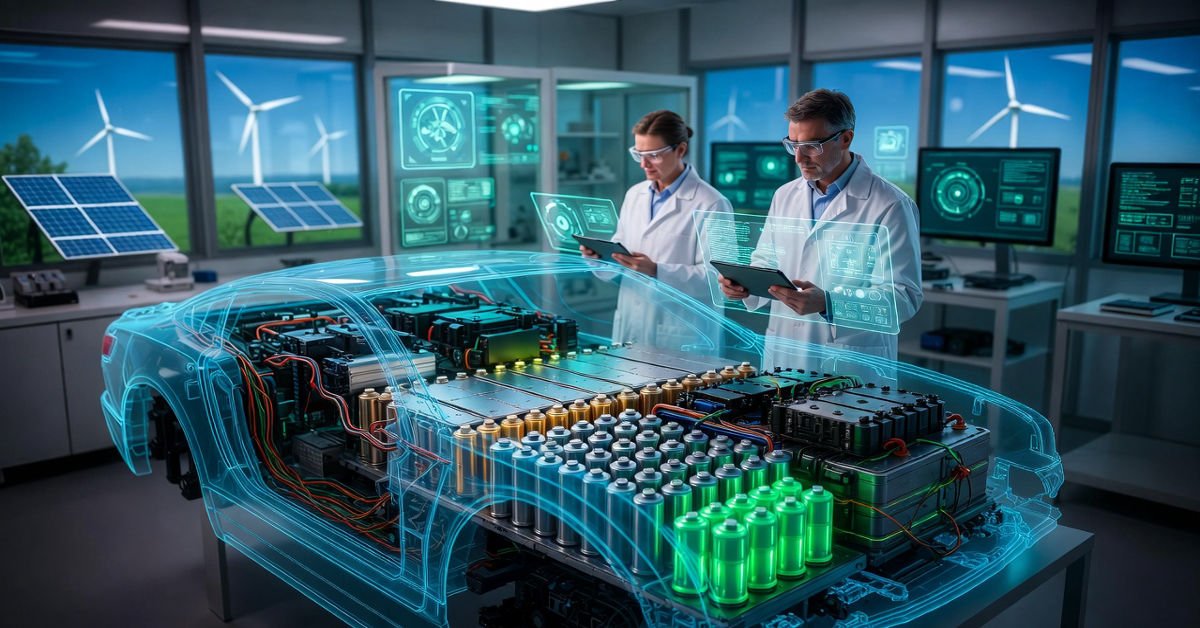
The global automotive industry is undergoing a historic transformation. As electric vehicles (EVs), hybrid systems, and alternative fuel technologies expand rapidly, automotive energy storage research has become one of the most critical scientific and engineering fields of the 21st century. From lithium-ion batteries to next-generation solid-state systems and hydrogen-based storage, innovation in energy storage is shaping how vehicles are powered, how far they can travel, and how sustainable transportation can become.
Energy storage research is no longer limited to laboratory experiments. It now influences real-world applications, including passenger cars, commercial fleets, public transport, and even autonomous vehicles. Governments, universities, and private companies are investing billions of dollars to make automotive energy storage safer, cheaper, and more environmentally friendly.
This article explores the foundations, technologies, challenges, and future directions of automotive energy storage research while highlighting its importance in global sustainability and mobility.
Understanding Automotive Energy Storage
Automotive energy storage refers to systems that store and release energy to power vehicles. Traditionally, this role was fulfilled by fossil fuels such as petrol and diesel. However, modern vehicles increasingly rely on electrochemical, electrical, and alternative energy storage systems.
Energy storage research focuses on improving several core aspects:
-
Energy density – how much energy can be stored per unit weight or volume
-
Power delivery – how fast energy can be released
-
Durability – how many charge-discharge cycles a system can handle
-
Safety – minimizing fire, explosion, or chemical risks
-
Environmental impact – reducing carbon footprint and resource extraction
These factors directly influence driving range, charging time, cost, and consumer acceptance of electric and hybrid vehicles.
Why Automotive Energy Storage Research Matters
Transportation accounts for a significant share of global greenhouse gas emissions. The shift toward electric and low-emission vehicles depends heavily on efficient energy storage solutions. Without reliable batteries and storage systems, electric mobility cannot compete with internal combustion engines in performance or convenience.
Automotive energy storage research supports:
-
Climate change mitigation through reduced emissions
-
Energy independence by lowering reliance on imported fossil fuels
-
Technological leadership in advanced manufacturing and materials science
-
Economic growth through new industries and skilled jobs
As nations aim to meet climate goals, breakthroughs in energy storage research are essential for large-scale adoption of electric mobility.
Main Types of Automotive Energy Storage Systems
Several energy storage technologies are currently used or under development in the automotive sector. Each has advantages and limitations.
Table 1: Key Automotive Energy Storage Technologies
| Technology | Energy Density | Charging Speed | Lifespan | Main Applications |
|---|---|---|---|---|
| Lithium-ion batteries | High | Moderate to fast | 8–15 years | Electric vehicles, hybrids |
| Solid-state batteries | Very high (theoretical) | Fast | Long (expected) | Future EVs |
| Nickel-metal hydride (NiMH) | Medium | Moderate | Long | Hybrid vehicles |
| Supercapacitors | Low | Very fast | Very long | Regenerative braking |
| Hydrogen storage (fuel cells) | High (as fuel) | Fast refueling | Medium | Fuel cell vehicles |
Each technology plays a role in current and future vehicle designs. Research efforts aim to combine these systems or replace older ones with more efficient alternatives.
Lithium-Ion Battery Research and Innovation
Lithium-ion batteries dominate today’s electric vehicle market. They offer a balance between energy density, cost, and reliability. However, research continues to address several issues:
-
Limited raw materials such as lithium and cobalt
-
Thermal runaway and fire risks
-
Recycling challenges
-
Performance loss over time
Scientists are developing new battery chemistries such as lithium iron phosphate (LFP), lithium-sulfur, and lithium-air to overcome these limitations. Improvements in battery management systems (BMS) also help extend battery life and enhance safety.
Battery research also focuses on fast-charging technologies, enabling drivers to recharge vehicles in minutes rather than hours. This is essential for widespread EV adoption.
Solid-State Batteries: The Next Frontier
Solid-state batteries replace liquid electrolytes with solid materials. This change dramatically improves safety and allows higher energy density.
Benefits of solid-state batteries include:
-
Reduced fire risk
-
Higher capacity in smaller size
-
Longer lifespan
-
Better performance in extreme temperatures
Major automotive manufacturers and research institutions are investing heavily in solid-state battery development. While mass production remains expensive and technically challenging, progress suggests commercial availability within the next decade.
Solid-state research is one of the most promising areas in automotive energy storage innovation.
Supercapacitors and Hybrid Energy Storage Systems
Supercapacitors store energy differently from batteries. They charge and discharge extremely fast, making them ideal for applications such as regenerative braking.
Hybrid systems combine batteries with supercapacitors to improve overall performance. For example, supercapacitors handle sudden power demands while batteries provide long-term energy supply.
This approach:
-
Reduces battery stress
-
Extends system lifespan
-
Improves efficiency
-
Enhances acceleration and braking recovery
Research in hybrid energy storage systems focuses on integration, control algorithms, and cost reduction.
Hydrogen Storage and Fuel Cell Research
Hydrogen fuel cell vehicles store hydrogen gas and convert it into electricity through chemical reactions. While not battery-based, hydrogen storage is a form of automotive energy storage research.
Challenges include:
-
Safe storage at high pressure
-
Infrastructure development
-
Production of green hydrogen
-
High system costs
Despite these obstacles, hydrogen research remains important for heavy-duty vehicles, long-distance transport, and commercial fleets where fast refueling is critical.
Materials Science and Nanotechnology in Energy Storage
Materials science plays a central role in automotive energy storage research. Scientists are exploring:
-
Graphene-based electrodes
-
Silicon anodes
-
Ceramic electrolytes
-
Nanostructured materials
Nanotechnology allows engineers to control battery behavior at the molecular level, improving conductivity and durability. These innovations directly impact battery efficiency and stability.
Safety and Thermal Management Research
One of the biggest concerns in automotive energy storage is safety. Overheating, short circuits, and mechanical damage can cause battery failure.
Research in this area includes:
-
Advanced cooling systems
-
Fire-resistant battery casings
-
Smart monitoring sensors
-
Predictive failure algorithms
Thermal management ensures that batteries operate within safe temperature ranges, especially during fast charging and heavy use.
Environmental Impact and Sustainability
Automotive energy storage research also focuses on reducing environmental impact. Mining lithium, cobalt, and nickel has ecological and social consequences. Therefore, scientists are exploring:
-
Cobalt-free battery chemistries
-
Recycling and second-life battery applications
-
Bio-based and abundant materials
-
Low-carbon manufacturing processes
Second-life batteries can be reused in stationary energy storage systems, such as solar power grids, before final recycling.
Sustainability Goals in Automotive Energy Storage Research
| Research Area | Objective | Environmental Benefit |
|---|---|---|
| Recycling technology | Recover valuable metals | Reduces mining impact |
| Alternative materials | Replace scarce elements | Improves resource security |
| Second-life batteries | Extend battery usage | Lowers waste generation |
| Green manufacturing | Reduce emissions | Supports climate targets |
These goals align automotive research with broader sustainability strategies.
Role of Artificial Intelligence in Energy Storage Research
Artificial intelligence (AI) is becoming a powerful tool in automotive energy storage research. AI models can:
-
Predict battery degradation
-
Optimize charging cycles
-
Detect faults early
-
Design new materials
Machine learning accelerates discovery by analyzing massive datasets from experiments and simulations. This reduces development time and cost while improving accuracy.
Government Policies and Global Research Initiatives
Governments worldwide support automotive energy storage research through funding programs and regulations. Public-private partnerships encourage collaboration between universities and industry.
Major initiatives include:
-
National battery research centers
-
Clean energy innovation grants
-
International research collaborations
-
EV infrastructure development plans
Such efforts ensure that scientific discoveries move quickly from laboratories to commercial products.
Economic and Industrial Impact
Energy storage research has created new industries around battery manufacturing, recycling, and software management systems. It also generates high-skilled employment in engineering and science.
Automotive companies that lead in energy storage innovation gain competitive advantages, including:
-
Lower production costs
-
Better vehicle performance
-
Stronger brand trust
-
Regulatory compliance
Research-driven development has become a core business strategy in the automotive sector.
Future Trends in Automotive Energy Storage Research
The future of automotive energy storage research will likely focus on:
-
Ultra-fast charging technologies
-
Fully recyclable batteries
-
Wireless charging systems
-
Integration with smart grids
-
Autonomous vehicle energy optimization
As vehicles become more connected, energy storage systems will interact with power networks, homes, and renewable energy sources.
The concept of a vehicle as a mobile energy unit is emerging, where cars can supply power back to the grid during peak demand.
Challenges and Limitations
Despite progress, several challenges remain:
-
High research and development costs
-
Supply chain constraints
-
Safety certification processes
-
Consumer trust and adoption
Addressing these challenges requires continuous innovation, transparent communication, and responsible resource management.
Conclusion
Automotive energy storage research is at the heart of the global transition to sustainable transportation. From lithium-ion batteries to solid-state systems, supercapacitors, and hydrogen storage, ongoing scientific efforts are redefining how vehicles store and use energy.
Through advances in materials science, artificial intelligence, safety engineering, and sustainability, researchers are building the foundation for cleaner, more efficient mobility. Governments and industries working together ensure that these innovations reach the market and benefit society.
1 thought on “Automotive Energy Storage Research”