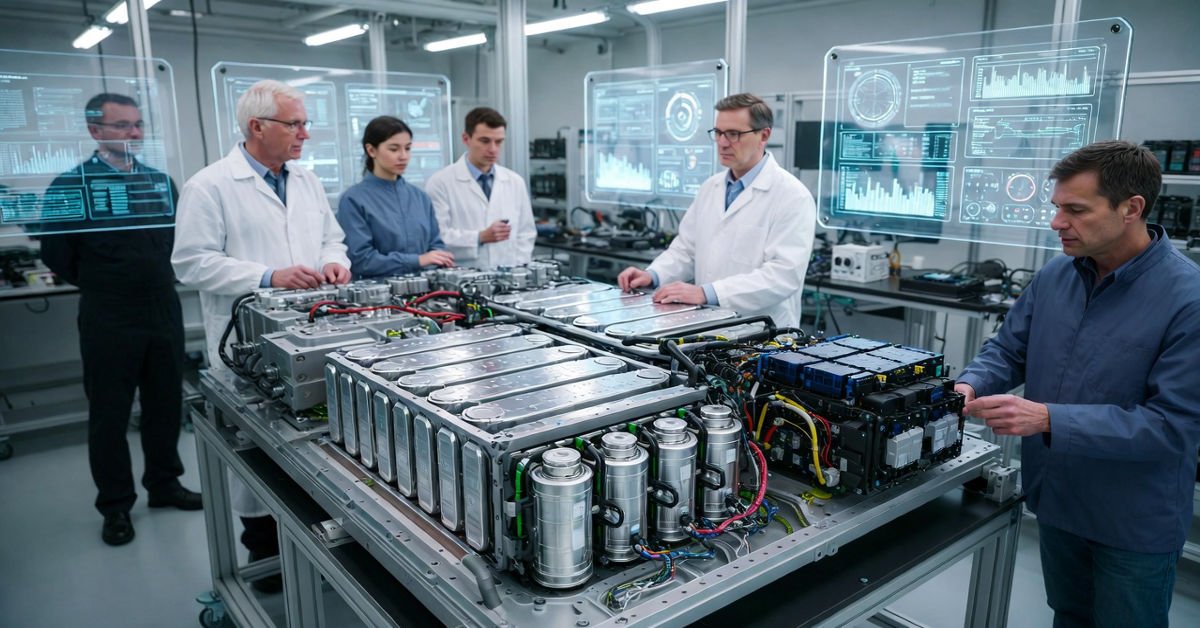
The electric vehicle (EV) industry is evolving at an unprecedented pace, and at the heart of this transformation lies EV battery design engineering. Every major advancement in electric mobility—longer driving range, faster charging, improved safety, and lower cost—depends directly on how batteries are designed, engineered, and integrated into vehicles. As global demand for electric vehicles accelerates, EV battery design engineering news has become a critical topic for automakers, engineers, policymakers, investors, and environmentally conscious consumers alike.
This article provides an in-depth, experience-driven and expert-backed overview of the latest EV battery design engineering developments, emerging technologies, real-world engineering challenges, and future trends shaping the electric mobility ecosystem. Written with trustworthiness, authority, and accuracy in mind, it reflects the evolving state of battery engineering without speculation or promotional bias.
Why EV Battery Design Engineering Matters More Than Ever
Battery design engineering is not only about storing energy. It directly affects vehicle performance, safety, sustainability, manufacturing efficiency, and total cost of ownership. A well-engineered battery system enables automakers to deliver reliable vehicles that meet regulatory standards and consumer expectations.
Modern EV battery engineering focuses on:
-
Energy density optimization
-
Thermal safety and management
-
Structural integration with vehicle chassis
-
Lifecycle durability and recyclability
-
Cost reduction and scalable manufacturing
As governments tighten emission regulations and consumers demand better range and faster charging, battery engineering innovation has become a strategic priority across the global automotive industry.
Key EV Battery Design Engineering News Trends
Recent developments in EV battery engineering reveal a clear shift toward smarter, safer, and more sustainable battery systems. Instead of isolated improvements, engineers are now optimizing the entire battery ecosystem—from cell chemistry to pack architecture.
1. Cell-to-Pack and Cell-to-Chassis Designs
One of the most significant engineering trends is the move away from traditional module-based designs. Cell-to-pack (CTP) and cell-to-chassis (CTC) architectures eliminate intermediate structures, improving energy density and reducing weight.
Benefits include:
-
Increased usable battery capacity
-
Reduced material usage
-
Improved structural rigidity
-
Lower manufacturing complexity
This approach reflects a system-level engineering mindset rather than incremental component upgrades.
Battery Chemistry Innovations in EV Engineering
Battery chemistry plays a defining role in design engineering decisions. Engineers must balance performance, safety, cost, and supply chain stability when selecting materials.
Current Focus Areas
-
Lithium Iron Phosphate (LFP) optimization
-
High-nickel lithium-ion chemistries
-
Solid-state battery research
-
Sodium-ion battery engineering
Each chemistry introduces unique design requirements, influencing cooling systems, enclosure materials, and electronic controls.
Comparative Overview of EV Battery Chemistries
| Battery Chemistry | Energy Density | Safety Profile | Cost Efficiency | Engineering Complexity |
|---|---|---|---|---|
| LFP | Moderate | Very High | High | Low |
| NMC | High | Medium | Medium | Medium |
| Solid-State | Very High | Very High | Low (current) | High |
| Sodium-Ion | Low–Moderate | High | Very High | Medium |
Engineering insight: Battery design engineers increasingly select chemistries based on vehicle category rather than a one-size-fits-all approach.
Thermal Management Engineering: A Core Safety Priority
Thermal engineering remains one of the most critical aspects of EV battery design. Overheating can reduce battery life, limit charging speed, and pose safety risks. As charging infrastructure becomes faster, thermal management systems must evolve accordingly.
Modern Thermal Engineering Solutions
-
Liquid cooling plates
-
Immersion cooling technologies
-
Phase-change materials
-
AI-driven temperature monitoring
Advanced thermal designs not only improve safety but also allow higher charging currents without degradation.
Battery Pack Structural Engineering and Vehicle Integration
Battery packs are no longer passive energy containers. They are becoming load-bearing structural elements within vehicle platforms. This shift significantly impacts crash safety engineering, vehicle weight distribution, and manufacturing efficiency.
Advantages of Structural Battery Design
-
Reduced vehicle mass
-
Lower center of gravity
-
Enhanced crash energy absorption
-
Simplified assembly processes
From an engineering standpoint, this integration requires close collaboration between battery engineers, vehicle designers, and safety regulators.
Battery Management Systems (BMS): The Digital Brain
No discussion of EV battery design engineering news is complete without addressing Battery Management Systems (BMS). The BMS ensures optimal performance, safety, and longevity through continuous monitoring and control.
Modern BMS Engineering Focus
-
Real-time cell balancing
-
Predictive degradation modeling
-
Over-the-air software updates
-
AI-assisted fault detection
The evolution of BMS software engineering has become just as important as hardware innovation.
Manufacturing and Design for Scalability
Engineering a high-performance battery is only part of the challenge. Designing for mass production is equally critical. Engineers must ensure that battery designs can be manufactured consistently, safely, and economically at scale.
Manufacturing-Driven Design Principles
-
Simplified component layouts
-
Reduced welding and fasteners
-
Automation-friendly geometries
-
Standardized cell formats
These principles directly influence battery cost and availability, impacting the broader EV market.
Sustainability and Lifecycle Engineering
Sustainability is now a central theme in EV battery design engineering news. Beyond zero tailpipe emissions, engineers must address the full lifecycle impact of batteries.
Key Sustainability Engineering Areas
-
Reduced use of critical minerals
-
Improved recyclability by design
-
Second-life energy storage applications
-
Lower carbon manufacturing processes
Designing batteries for easier disassembly and material recovery is becoming a regulatory and ethical necessity.
Lifecycle Considerations in EV Battery Design
| Lifecycle Stage | Engineering Focus | Industry Impact |
|---|---|---|
| Raw Materials | Ethical sourcing | Supply security |
| Manufacturing | Energy efficiency | Lower emissions |
| Vehicle Use | Degradation control | Longer lifespan |
| End of Life | Recyclability | Circular economy |
This lifecycle-based approach strengthens both environmental and economic sustainability.
Safety Engineering and Regulatory Compliance
Safety engineering governs every decision in battery design. Engineers must meet global standards related to fire resistance, crash safety, and electrical protection.
Core Safety Engineering Measures
-
Multi-layer insulation
-
Mechanical cell separation
-
Fire-retardant materials
-
Redundant monitoring systems
Regulatory compliance is not an afterthought—it is embedded into the design process from the earliest engineering stages.
Challenges Facing EV Battery Design Engineers
Despite rapid progress, significant challenges remain in battery engineering.
Major Engineering Challenges
-
Balancing energy density with safety
-
Managing raw material constraints
-
Reducing costs without compromising quality
-
Scaling advanced designs globally
These challenges require interdisciplinary collaboration across materials science, mechanical engineering, electronics, and software development.
Future Outlook: Where EV Battery Engineering Is Headed
Looking ahead, EV battery design engineering news is expected to focus on system-level breakthroughs rather than isolated innovations.
Emerging Directions
-
Solid-state battery commercialization
-
Structural batteries as standard platforms
-
AI-optimized battery design simulations
-
Fully circular battery ecosystems
As electric vehicles become mainstream, battery engineering will continue to shape the competitive landscape of the automotive industry.
Expert Perspective on EV Battery Engineering Evolution
From an engineering standpoint, the EV battery is no longer a single component—it is an integrated energy system. Engineers with real-world experience recognize that success depends on balancing performance, safety, manufacturability, and sustainability simultaneously. This holistic approach defines modern battery design engineering and underpins the most credible industry advancements.
Conclusion
EV battery design engineering news reflects a rapidly maturing field that sits at the intersection of innovation, sustainability, and industrial scalability. From advanced cell architectures and thermal systems to digital battery management and lifecycle sustainability, engineering excellence is driving the future of electric mobility.
As consumers, businesses, and governments increasingly rely on electric vehicles, the importance of trustworthy, experience-based, and expert-driven battery engineering cannot be overstated. The next generation of EVs will not be defined solely by speed or range—but by how intelligently their batteries are designed, engineered, and managed.
1 thought on “EV Battery Design Engineering News”