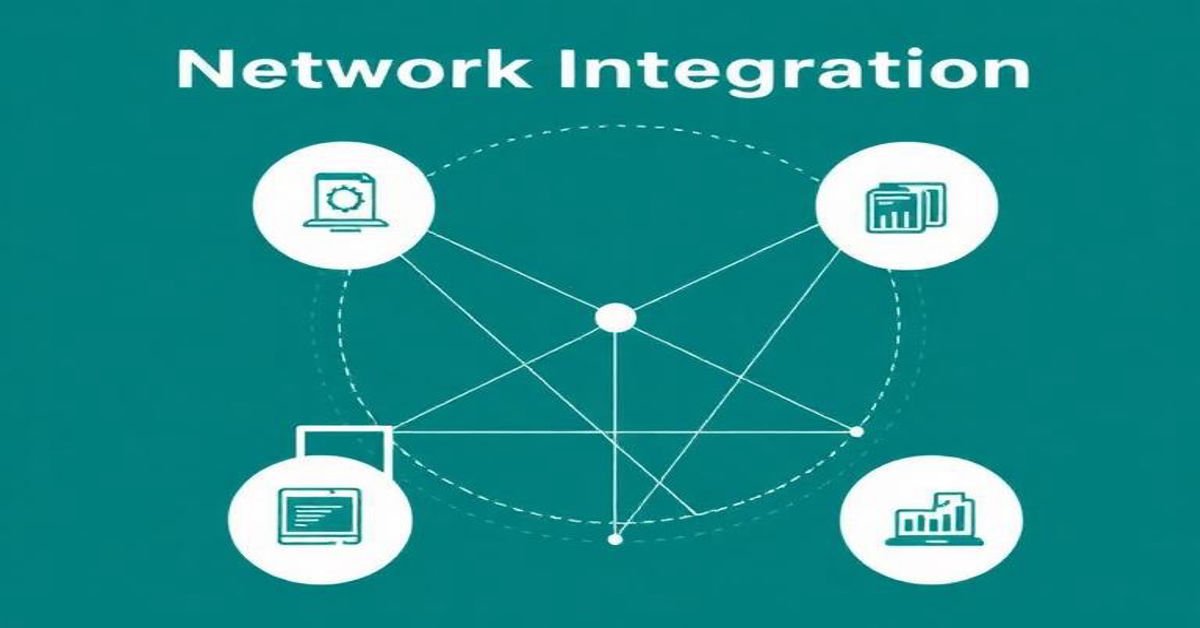
In today’s digitally connected economy, network integration has become a foundation for operational efficiency, scalability, and long-term competitiveness. Organizations no longer operate on isolated systems. Instead, they rely on integrated networks that connect hardware, software, cloud platforms, data centers, and security frameworks into one cohesive environment.
Understanding Network Integration
Network integration refers to the process of combining different network systems, technologies, and services so they function as a single, unified infrastructure. This includes local area networks (LANs), wide area networks (WANs), cloud services, security systems, communication tools, and application platforms.
From an experience perspective, businesses that invest in proper integration report smoother workflows, reduced downtime, and improved data visibility. Poor integration, on the other hand, often results in performance bottlenecks, security gaps, and rising operational costs.
Why Pricing Models Matter in Network Integration
Choosing the right pricing model is just as important as choosing the right technology. Pricing models directly influence:
-
Budget predictability
-
Scalability planning
-
Long-term cost efficiency
-
Vendor accountability
-
Return on investment (ROI)
Without understanding pricing structures, organizations risk overpaying, under-scoping projects, or facing unexpected costs after deployment.
Key Factors That Influence Network Integration Pricing
Before exploring pricing models, it is important to understand what drives costs in network integration projects.
Project scope and complexity
Larger networks with multiple locations, hybrid cloud environments, and advanced security layers cost more to integrate.
Existing infrastructure condition
Legacy systems often require additional customization, testing, and migration work.
Security and compliance requirements
Industries such as finance, healthcare, and government require stricter security standards, increasing integration costs.
Customization level
Highly tailored solutions cost more than standardized deployments.
Ongoing support and maintenance
Post-integration monitoring, updates, and support influence total pricing.
Common Network Integration Pricing Models Explained
Different businesses require different pricing approaches. Below are the most widely used network integration pricing models, explained with real-world clarity.
Fixed-Price Pricing Model
The fixed-price model involves a single agreed-upon cost for the entire network integration project.
How it works:
The vendor assesses requirements, defines the project scope, and provides a final price before work begins.
Advantages:
-
Predictable costs
-
Easier budgeting
-
Clear deliverables
Limitations:
-
Less flexibility for changes
-
Risk of additional charges if scope expands
Best for:
Small to medium projects with clearly defined requirements.
Time and Materials (T&M) Pricing Model
In the time and materials model, clients pay based on actual hours worked and resources used.
How it works:
Billing is calculated using hourly or daily rates for engineers, consultants, and technical staff, plus material costs.
Advantages:
-
High flexibility
-
Suitable for evolving projects
-
Transparent work tracking
Limitations:
-
Less predictable final cost
-
Requires strong project management
Best for:
Complex or evolving integration projects where requirements may change.
Subscription-Based Pricing Model
The subscription model spreads integration and management costs over a recurring monthly or annual fee.
How it works:
Clients pay a fixed subscription that covers integration, monitoring, updates, and support.
Advantages:
-
Predictable recurring costs
-
Continuous support and upgrades
-
Lower upfront investment
Limitations:
-
Long-term costs may exceed one-time pricing
-
Vendor dependency
Best for:
Cloud-centric organizations and businesses preferring operational expenditure (OpEx).
Managed Services Pricing Model
Under this model, network integration is bundled with ongoing management services.
How it works:
The vendor designs, integrates, and continuously manages the network for a recurring fee.
Advantages:
-
Reduced internal IT workload
-
Proactive monitoring and security
-
Access to specialized expertise
Limitations:
-
Less direct control
-
Long-term contracts
Best for:
Enterprises without large in-house IT teams.
Hybrid Pricing Model
The hybrid model combines multiple pricing structures.
How it works:
Initial integration may be fixed-price, while ongoing support uses subscription or T&M pricing.
Advantages:
-
Balanced flexibility and predictability
-
Customizable cost structure
Limitations:
-
Requires careful contract management
Best for:
Medium to large enterprises with diverse integration needs.
Comparison of Network Integration Pricing Models
| Pricing Model | Cost Predictability | Flexibility | Upfront Cost | Best Use Case |
|---|---|---|---|---|
| Fixed-Price | High | Low | Medium | Clearly defined projects |
| Time & Materials | Low | High | Low | Complex, evolving projects |
| Subscription | High | Medium | Low | Cloud-first businesses |
| Managed Services | High | Medium | Medium | Outsourced IT management |
| Hybrid | Medium | High | Medium | Large-scale integrations |
Each model offers unique advantages depending on organizational goals, risk tolerance, and operational strategy.
Hidden Costs to Watch in Network Integration Pricing
Even transparent pricing models can include indirect costs that businesses often overlook.
Integration testing and validation
Ensuring systems work together can add time and cost.
Security audits and compliance checks
Mandatory in regulated industries.
Training and documentation
End-user and IT staff training is often billed separately.
Post-deployment changes
System updates or feature additions may incur additional fees.
Understanding these factors improves trust and decision-making.
Evaluating ROI in Network Integration Pricing
Pricing should never be evaluated in isolation. Instead, organizations should focus on return on investment.
Operational efficiency gains
Integrated networks reduce manual processes and downtime.
Improved scalability
Well-integrated systems adapt faster to business growth.
Enhanced security posture
Centralized security reduces breach risks and compliance penalties.
Lower long-term maintenance costs
Modern integration minimizes troubleshooting and repair expenses.
A slightly higher upfront price may deliver stronger long-term value.
How Businesses Can Choose the Right Pricing Model
Selecting the right model requires a structured approach.
Assess internal capabilities
Organizations with strong IT teams may prefer T&M or hybrid models.
Define long-term goals
Growth-focused businesses benefit from scalable subscription models.
Analyze cash-flow preferences
Fixed-price suits capital expenditure, subscriptions favor operational budgets.
Request transparent proposals
Clear scope definitions reduce disputes and hidden costs.
Best Practices for Negotiating Network Integration Pricing
Experienced buyers follow proven negotiation strategies.
Demand detailed cost breakdowns
Transparency builds trust.
Clarify scope boundaries
Avoid unexpected scope creep.
Include performance benchmarks
Ensure service quality standards.
Plan exit clauses
Reduce long-term vendor lock-in risks.
These practices strengthen authority and protect business interests.
Future Trends in Network Integration Pricing Models
Pricing models continue to evolve with technology.
Usage-based pricing
Costs scale with network usage and data consumption.
AI-driven optimization pricing
Vendors charge based on performance improvements delivered.
Outcome-based pricing
Fees linked to uptime, speed, or efficiency metrics.
Security-as-a-service integration
Bundled security pricing is becoming standard.
Understanding these trends helps businesses future-proof decisions.
Trust and Compliance in Network Integration Services
Trustworthiness is essential when outsourcing network integration.
Data privacy compliance
Vendors must follow regional and international standards.
Service level agreements (SLAs)
Clear uptime and response commitments.
Vendor certifications and experience
Proven expertise reduces risk.
Trust-focused partnerships lead to long-term success.
Conclusion
Network integration pricing models are not one-size-fits-all solutions. Each model reflects different business needs, risk tolerances, and growth strategies. By understanding fixed-price, time and materials, subscription, managed services, and hybrid pricing structures, organizations can make informed, confident decisions.
1 thought on “Network Integration Pricing Models”