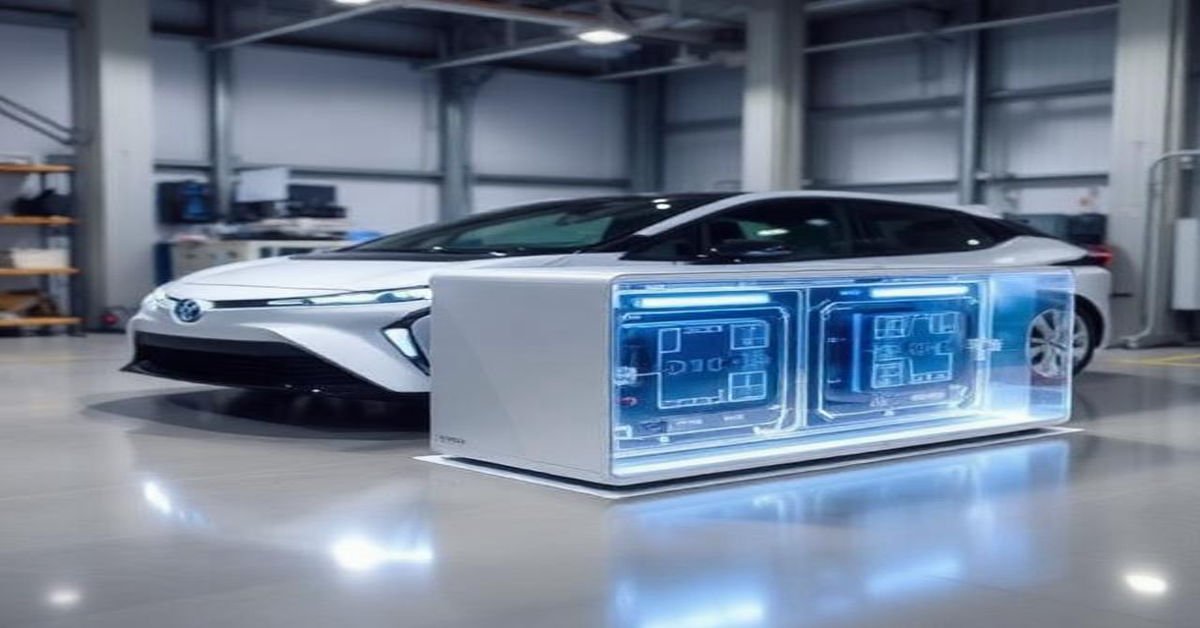
The global shift toward electric mobility has placed battery technology at the heart of automotive innovation. Among traditional automakers transitioning into electrification, Toyota EV battery technology stands out for its long-term vision, reliability-focused engineering, and continuous research investment. Known globally for hybrid leadership, Toyota is now applying decades of battery experience to fully electric vehicles (EVs), plug-in hybrids, and next-generation solid-state batteries.
Toyota’s Battery Philosophy: Safety, Longevity, and Real-World Usability
Toyota’s approach to EV batteries differs from many newer EV-only brands. Instead of focusing solely on maximum range or rapid charging, Toyota prioritizes battery longevity, thermal stability, and real-world reliability. This philosophy is rooted in over 25 years of experience with hybrid batteries, beginning with the first Toyota Prius.
Toyota believes that an electric vehicle battery should maintain consistent performance over many years, across varied climates, and with minimal degradation. This mindset directly influences battery chemistry selection, cooling systems, and software control strategies.
Evolution of Toyota EV Battery Technology
Toyota’s battery journey can be divided into three major phases: nickel-metal hydride (NiMH), lithium-ion (Li-ion), and next-generation solid-state batteries.
| Battery Era | Primary Use | Key Advantages | Limitations |
|---|---|---|---|
| NiMH | Early hybrids | Extremely durable, safe | Lower energy density |
| Lithium-Ion | Modern hybrids & EVs | Higher range, lighter weight | Requires advanced thermal control |
| Solid-State (Future) | Next-gen EVs | Faster charging, higher energy density | High manufacturing complexity |
Toyota continues to support multiple battery chemistries simultaneously, allowing flexibility across different vehicle segments and markets.
Lithium-Ion Battery Technology in Toyota EVs
Modern Toyota electric vehicles, such as the bZ4X, rely on advanced lithium-ion battery packs. These batteries are designed with a strong emphasis on thermal safety and degradation control, addressing common concerns among EV buyers.
Key Features of Toyota Lithium-Ion Batteries
Toyota lithium-ion batteries incorporate multiple safety and performance layers:
-
High-quality cathode materials for stable energy output
-
Advanced battery management systems (BMS)
-
Liquid cooling for temperature regulation
-
Conservative charging curves to extend lifespan
These features help reduce the risk of thermal runaway and capacity loss, even under demanding driving conditions.
Battery Management System (BMS): The Brain Behind Toyota EV Batteries
One of the most critical components of Toyota EV battery technology is the Battery Management System. Toyota’s BMS constantly monitors voltage, temperature, charging speed, and state of health at the cell level.
This intelligent software ensures that:
-
Each battery cell operates within safe limits
-
Charging and discharging are optimized for longevity
-
Battery performance remains consistent over time
Toyota’s conservative BMS calibration may slightly limit peak charging speed, but it significantly improves long-term durability, aligning with the brand’s reliability reputation.
Thermal Management and Battery Safety
Battery safety is a cornerstone of Toyota’s EV strategy. Unlike some manufacturers that rely heavily on passive cooling, Toyota uses active thermal management systems to maintain optimal battery temperature.
| Safety Feature | Purpose | Benefit to Owners |
|---|---|---|
| Liquid Cooling | Heat dissipation | Prevents overheating |
| Cell Isolation | Limits failure spread | Enhanced fire safety |
| Voltage Monitoring | Detects anomalies | Early fault prevention |
By controlling heat and electrical stress, Toyota EV batteries maintain stable performance even in hot climates and during fast charging sessions.
Toyota Solid-State Battery Technology: The Next Revolution
Perhaps the most exciting aspect of Toyota EV battery technology is its leadership in solid-state battery research. Toyota holds thousands of patents in solid-state battery design and aims to commercialize this technology within the next few years.
What Makes Solid-State Batteries Different
Unlike lithium-ion batteries that use liquid electrolytes, solid-state batteries use solid electrolytes, offering several advantages:
-
Higher energy density for longer driving range
-
Significantly faster charging times
-
Reduced fire risk
-
Improved performance in cold weather
Toyota has announced prototypes capable of charging in under 15 minutes, potentially transforming EV adoption worldwide.
Battery Longevity and Degradation Control
Toyota designs EV batteries to retain usable capacity for extended periods. Many Toyota EV and hybrid batteries are engineered to last 8–10 years or more, supported by long warranty programs.
| Factor | Toyota Approach | Result |
|---|---|---|
| Charging Limits | Controlled fast charging | Reduced cell stress |
| Temperature Control | Active cooling | Slower degradation |
| Software Updates | Adaptive BMS | Performance consistency |
This focus on long-term ownership value aligns well with consumers seeking dependable electric vehicles rather than short-term performance gains.
Manufacturing and Quality Control
Toyota applies its renowned Toyota Production System (TPS) to battery manufacturing. This system emphasizes precision, waste reduction, and continuous improvement.
Key manufacturing principles include:
-
Strict quality inspections at every stage
-
Cell-level testing before pack assembly
-
Automated and manual safety checks
-
Traceability of battery materials
Toyota also partners with leading battery manufacturers while gradually expanding in-house battery production capabilities to maintain quality control.
Sustainability and Battery Recycling Initiatives
Sustainability is a growing concern in EV production, and Toyota actively addresses battery lifecycle impact. Toyota focuses on reducing environmental harm across battery sourcing, usage, and end-of-life management.
Toyota’s Battery Sustainability Strategy
-
Responsible sourcing of raw materials
-
Extended battery lifespan to reduce waste
-
Second-life battery applications (energy storage)
-
Advanced recycling programs to recover valuable metals
Toyota aims to achieve carbon neutrality across its operations while making EV batteries more environmentally responsible.
Toyota EV Platforms and Battery Integration
Toyota’s dedicated electric vehicle platform, known as e-TNGA, is designed to integrate battery packs efficiently into the vehicle structure. This architecture improves:
-
Weight distribution
-
Structural rigidity
-
Interior space utilization
-
Crash safety
Battery packs are mounted low in the chassis, lowering the center of gravity and enhancing driving stability without compromising cabin comfort.
Charging Compatibility and Infrastructure Support
Toyota EV batteries are designed to support both AC and DC charging standards commonly used worldwide. While Toyota prioritizes battery health over extreme charging speeds, its vehicles remain practical for everyday use.
| Charging Type | Typical Use | Battery Impact |
|---|---|---|
| AC Home Charging | Overnight charging | Minimal degradation |
| DC Fast Charging | Long trips | Managed by BMS |
| Smart Charging | Grid optimization | Improved efficiency |
Toyota encourages smart charging practices to extend battery lifespan and reduce electricity costs.
Comparison with Other EV Battery Technologies
Toyota’s EV battery strategy contrasts with competitors who prioritize ultra-fast charging or maximum range at the expense of longevity.
| Brand Focus | Charging Speed | Longevity | Safety |
|---|---|---|---|
| Toyota | Moderate | Very High | Extremely High |
| EV Startups | Very High | Moderate | High |
| Luxury EV Brands | High | High | High |
This balanced approach appeals to practical buyers who value reliability and low long-term ownership costs.
Real-World Ownership Experience
Toyota EV owners benefit from predictable battery behavior, minimal performance loss, and strong manufacturer support. Toyota’s extensive service network ensures that battery diagnostics, updates, and repairs are widely accessible.
Key ownership advantages include:
-
Long battery warranties
-
Proven reliability reputation
-
Conservative degradation rates
-
Transparent battery health monitoring
Future Roadmap of Toyota EV Battery Technology
Toyota’s future EV battery roadmap includes:
-
Commercial solid-state battery vehicles
-
Reduced battery costs through mass production
-
Improved energy density without compromising safety
-
Expanded EV lineup across multiple segments
Toyota aims to offer diverse electrified options rather than a one-size-fits-all solution, supporting global adoption.
Why Toyota EV Battery Technology Matters
In a rapidly evolving EV market, Toyota EV battery technology represents a measured, research-driven path toward electrification. By focusing on safety, longevity, sustainability, and real-world usability, Toyota delivers battery systems designed for long-term trust rather than short-term hype.
As solid-state batteries approach commercialization, Toyota is well positioned to shape the future of electric mobility while maintaining the reliability standards that made the brand globally respected.
Final Thoughts
Toyota’s electric vehicle battery technology reflects decades of engineering discipline, real-world testing, and continuous innovation. While some manufacturers chase headline numbers, Toyota builds batteries meant to endure everyday life, diverse climates, and long ownership cycles.
For consumers, investors, and EV enthusiasts alike, Toyota’s battery strategy signals a future where electric vehicles are not just powerful or fast—but dependable, safe, and sustainable.
3 thoughts on “Toyota EV Battery Technology”