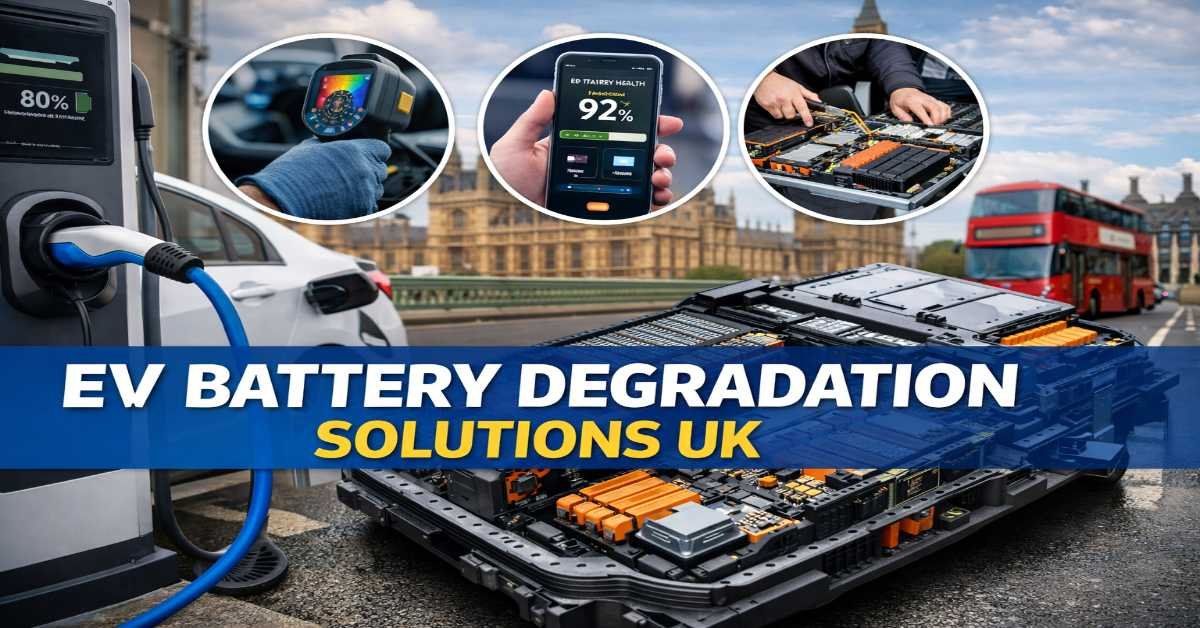
Electric vehicles (EVs) are rapidly transforming the transportation landscape in the United Kingdom. With increasing adoption driven by environmental awareness, government incentives, and advancing technology, one concern remains central for EV owners and buyers alike: battery degradation.
Understanding how EV batteries degrade and, more importantly, how to slow this process is critical for maximizing vehicle lifespan, maintaining performance, and protecting your investment. This comprehensive guide explores EV battery degradation solutions in the UK, backed by practical insights, expert recommendations, and industry best practices.
What is EV Battery Degradation?
EV battery degradation refers to the gradual loss of battery capacity over time, reducing the vehicle’s driving range and efficiency. Lithium-ion batteries—the most common type used in EVs—naturally degrade due to chemical and physical changes within the cells.
Key Causes of Battery Degradation
- Frequent fast charging
- Extreme temperatures (hot or cold)
- High state of charge (keeping battery at 100%)
- Deep discharging (0% battery levels)
- Age and usage cycles
Even premium EVs from brands like Tesla and Nissan experience gradual degradation, though modern battery management systems significantly reduce the impact.
Why Battery Health Matters in the UK
In the UK, EV battery performance is particularly important due to:
- Variable climate conditions (cold winters affect efficiency)
- High reliance on public charging infrastructure
- Rising EV resale market demand
- Government targets for net-zero emissions
The UK Government has also emphasized sustainable EV use, making battery longevity a key component of eco-friendly transportation.
Average EV Battery Lifespan
Most EV batteries are designed to last 8–15 years or around 100,000–200,000 miles, depending on usage and maintenance.
Battery Degradation Estimates
| Year of Use | Average Capacity Retention |
|---|---|
| 1–2 Years | 95%–98% |
| 3–5 Years | 90%–95% |
| 6–8 Years | 80%–90% |
| 10+ Years | 70%–80% |
Modern EVs such as the Nissan Leaf and Tesla Model 3 often outperform these averages due to advanced thermal management systems.
Top EV Battery Degradation Solutions in the UK
1. Smart Charging Practices
One of the most effective ways to preserve battery health is adopting smart charging habits.
Best Practices:
- Maintain charge between 20% and 80%
- Avoid frequent rapid charging unless necessary
- Use overnight slow charging at home
The UK’s growing network of smart chargers supports these practices, helping users manage charging cycles efficiently.
2. Use of Battery Management Systems (BMS)
Modern EVs come equipped with sophisticated BMS technology that:
- Monitors battery temperature
- Balances cell charge levels
- Prevents overcharging and deep discharge
Manufacturers like Jaguar Land Rover integrate advanced BMS features in their EV models to enhance battery life.
3. Temperature Control and Thermal Management
Extreme temperatures accelerate battery wear. In the UK:
- Cold weather reduces battery efficiency temporarily
- Heat exposure can cause permanent degradation
Solutions:
- Park in shaded or covered areas
- Precondition the battery before driving
- Use vehicles with active thermal management systems
4. Software Updates and Optimization
EV manufacturers regularly release updates that:
- Improve battery efficiency
- Optimize charging algorithms
- Extend range
Brands like BMW and Hyundai provide over-the-air (OTA) updates that enhance battery performance over time.
5. Regenerative Braking Utilization
Regenerative braking recovers energy during deceleration and feeds it back into the battery.
Benefits:
- Reduces battery strain
- Improves efficiency
- Extends driving range
6. Avoiding Deep Discharge Cycles
Letting your battery drop to 0% frequently can significantly reduce lifespan.
Recommended Approach:
- Recharge before battery falls below 20%
- Avoid leaving the vehicle unused with a low charge
7. Regular Maintenance and Diagnostics
Routine EV servicing includes battery health checks.
What to Monitor:
- State of Health (SoH)
- Charging efficiency
- Range consistency
Certified UK service centres provide detailed battery diagnostics to detect early signs of degradation.
UK Charging Infrastructure and Its Role
The UK has a robust EV charging network, including:
- Home chargers
- Workplace charging stations
- Public rapid chargers
Charging Types Comparison
| Charging Type | Speed | Impact on Battery |
|---|---|---|
| Slow (AC) | 6–12 hours | Low impact |
| Fast (AC/DC) | 2–4 hours | Moderate |
| Rapid (DC) | 30–60 mins | Higher impact |
Using rapid chargers occasionally is fine, but relying on them daily may accelerate degradation.
Read more:Mahindra Electric Car Low Price
Battery Recycling and Second-Life Solutions in the UK
The UK is investing heavily in battery recycling initiatives to reduce environmental impact.
Key Developments:
- Second-life battery use for energy storage
- Recycling plants recovering valuable materials
- Circular economy initiatives
Organizations like Faraday Institution are leading research in battery sustainability and reuse.
Government Policies Supporting Battery Longevity
The Office for Zero Emission Vehicles supports EV adoption with policies that indirectly promote battery health:
- Grants for home chargers
- Investment in smart charging
- Research funding for battery innovation
Emerging Technologies to Reduce Degradation
1. Solid-State Batteries
- Higher energy density
- Lower degradation rates
- Safer and more stable
2. Advanced Lithium-Ion Chemistries
- Improved cycle life
- Better thermal resistance
3. AI-Based Battery Monitoring
- Predictive maintenance
- Real-time optimization
Common Myths About EV Battery Degradation
| Myth | Reality |
|---|---|
| EV batteries fail quickly | Most last over a decade |
| Fast charging always damages batteries | Occasional use is safe |
| Cold weather permanently harms batteries | Effects are mostly temporary |
| Battery replacement is frequent | Rare within warranty period |
Expert Tips for UK EV Owners
- Charge smartly: Avoid 100% daily charging
- Drive efficiently: Use eco modes
- Monitor battery health apps
- Limit exposure to extreme temperatures
- Keep software updated
Read more:Tesla EV Battery UK: Technology, Performance, Costs, and Future Outlook
Future Outlook of EV Battery Solutions in the UK
The UK aims to ban new petrol and diesel cars by 2035, accelerating EV adoption. With this shift:
- Battery technology will continue to improve
- Charging infrastructure will expand further
- Degradation rates will decrease with innovation
Companies and research institutions are collaborating to ensure EV batteries remain reliable, efficient, and sustainable.
Conclusion
EV battery degradation is a natural process, but it can be effectively managed with the right strategies. By adopting smart charging habits, leveraging modern technology, and following best practices, UK EV owners can significantly extend battery life and maintain optimal performance.
With strong government support, ongoing research, and rapid technological advancements, the future of EV batteries in the UK looks promising. Whether you’re a new EV owner or considering making the switch, understanding battery degradation solutions is key to a smooth and cost-effective electric driving experience.
1 thought on “EV Battery Degradation Solutions UK”