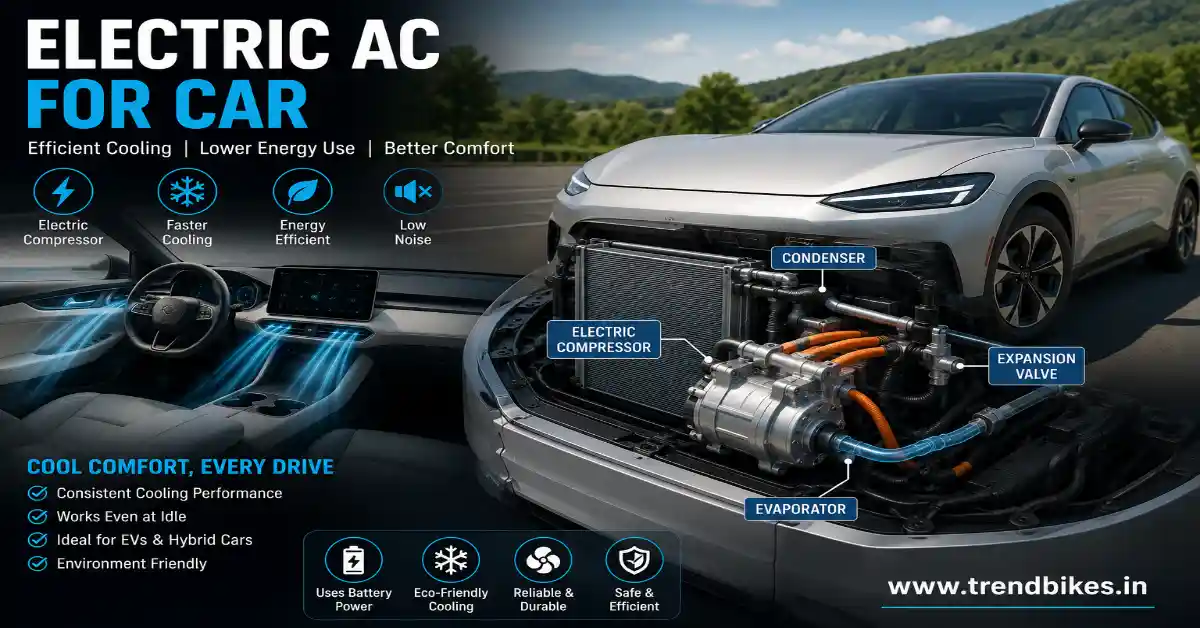
Electric AC for Car is one of the most important comfort features in modern vehicles. Whether you’re driving through hot summers or humid weather, a properly functioning air conditioning system keeps the cabin cool, improves driving comfort, and enhances safety by reducing driver fatigue.
Unlike traditional engine-driven systems, many modern electric vehicles (EVs), hybrid cars, and even some converted vehicles use electric air conditioning compressors that operate independently of the engine. This allows cooling even when the engine is turned off or during idle-stop situations.
In this comprehensive guide, you’ll learn how electric car air conditioning works, its benefits, common problems, maintenance tips, pricing, and buying advice.
What Is an Electric AC for Car?
An electric AC for car is an air conditioning system powered by an electric compressor instead of a belt connected to the engine. It provides efficient cooling while consuming electrical power from the vehicle’s battery.
These systems are commonly found in:
- Electric vehicles (EVs)
- Hybrid vehicles
- Camper vans
- Converted electric cars
- Commercial vehicles
- Parked cooling systems
Because they do not rely on engine RPM, they can deliver consistent cooling performance regardless of vehicle speed.
How Does an Electric Car AC Work?
The system works similarly to a traditional air conditioner but uses electricity instead of engine power.
| Component | Function |
|---|---|
| Electric Compressor | Compresses refrigerant using electric power |
| Condenser | Releases heat to outside air |
| Expansion Valve | Reduces refrigerant pressure |
| Evaporator | Produces cold air inside cabin |
| Cabin Blower | Circulates cool air |
| Temperature Sensors | Maintain desired cabin temperature |
The electric compressor receives power directly from the battery pack or electrical system and circulates refrigerant continuously.
Benefits of an Electric AC for Car
Modern electric air conditioning systems provide several advantages.
Consistent Cooling
Cooling remains stable regardless of engine speed.
Improved Fuel Efficiency
Hybrid vehicles don’t need to keep the engine running solely to operate the air conditioner.
Better Comfort
Passengers enjoy uninterrupted cooling during traffic stops.
Lower Noise
Electric compressors are quieter than conventional belt-driven systems.
Reduced Engine Load
Traditional compressors increase engine workload. Electric compressors eliminate this mechanical load.
Ideal for Electric Vehicles
Electric AC systems are designed specifically for battery-powered vehicles, optimizing energy consumption.
Electric AC vs Traditional Car AC
| Feature | Electric AC | Traditional AC |
|---|---|---|
| Compressor Drive | Electric Motor | Engine Belt |
| Cooling at Idle | Excellent | Depends on Engine |
| Fuel Consumption | Lower in Hybrid Systems | Higher |
| Noise | Low | Moderate |
| Maintenance | Moderate | Moderate |
| Suitable for EVs | Yes | No |
Types of Electric Car AC Systems
High Voltage Electric Compressor
Commonly used in electric vehicles and hybrids.
12V Electric Air Conditioner
Suitable for small vehicles, camper vans, and parked cooling.
24V Electric AC
Popular in trucks, buses, and commercial vehicles.
Parking Air Conditioner
Allows cabin cooling without running the engine.
Common Problems in Electric AC for Cars
Even advanced systems may experience issues over time.
Weak Cooling
Possible causes:
- Low refrigerant
- Dirty condenser
- Faulty compressor
- Clogged cabin filter
Compressor Failure
Electrical faults or excessive wear can stop the compressor.
Battery Drain
A damaged compressor may consume excessive power.
Cooling Fan Issues
Improper airflow reduces cooling efficiency.
Sensor Malfunction
Temperature sensors may provide incorrect readings.
Maintenance Tips
Proper maintenance extends the lifespan of the AC system.
Replace Cabin Air Filter
A clean filter improves airflow and cooling.
Inspect Refrigerant Levels
Low refrigerant significantly reduces performance.
Clean the Condenser
Remove dirt, leaves, and debris regularly.
Operate the AC Regularly
Running the AC occasionally keeps seals lubricated.
Schedule Professional Inspection
Annual servicing helps identify issues before they become expensive repairs.
Signs Your Electric Car AC Needs Repair
Watch for these warning signs:
- Warm air from vents
- Strange compressor noises
- Bad odor inside cabin
- Reduced airflow
- Water leakage
- Battery drains faster while AC operates
- AC turns on and off frequently
Ignoring these symptoms may result in costly repairs.
Average Repair Costs
Costs vary depending on the vehicle model and region.
| Repair | Estimated Cost |
|---|---|
| Cabin Filter Replacement | $20–$60 |
| Refrigerant Recharge | $80–$250 |
| AC Compressor Replacement | $500–$1,800 |
| Condenser Replacement | $250–$900 |
| Cooling Fan Repair | $150–$600 |
| AC Diagnostic Inspection | $50–$150 |
Prices are approximate and may vary by location and vehicle model.
How to Improve AC Performance
You can improve cooling efficiency by following these practices:
- Park in shaded areas.
- Use windshield sunshades.
- Close windows before turning on the AC.
- Clean air vents regularly.
- Replace filters on schedule.
- Avoid overloading the electrical system.
- Maintain recommended refrigerant levels.
Choosing the Best Electric AC for Your Car
Before purchasing or upgrading, consider:
| Buying Factor | Why It Matters |
|---|---|
| Voltage Compatibility | Match your vehicle’s electrical system |
| Cooling Capacity | Suitable for cabin size |
| Energy Efficiency | Reduces battery usage |
| Noise Level | Improves comfort |
| Brand Reputation | Better reliability |
| Warranty | Protects your investment |
| Service Availability | Easier future maintenance |
Electric AC for Electric Vehicles
Electric vehicles rely entirely on electric compressors for cabin cooling. Since the AC system uses battery power, manufacturers focus on maximizing efficiency.
Many modern EVs include:
- Automatic climate control
- Heat pump integration
- Smart battery cooling
- Remote cabin pre-cooling
- Energy-saving climate modes
These features help balance passenger comfort with driving range.
Frequently Asked Questions
Does an electric AC work when the engine is off?
Yes. Electric compressors can operate independently of the engine, depending on the vehicle’s electrical system.
Does using AC reduce EV driving range?
Yes, air conditioning consumes battery power, which may slightly reduce driving range. However, modern EVs are designed to manage this efficiently.
How often should a car AC be serviced?
Most experts recommend a professional inspection every 1–2 years, or sooner if cooling performance declines.
Can an electric compressor be repaired?
Some issues can be repaired, but severe compressor damage often requires replacement.
Is electric AC better than traditional AC?
For electric and hybrid vehicles, electric AC systems offer better efficiency, quieter operation, and consistent cooling.
Advantages and Disadvantages
| Advantages | Disadvantages |
|---|---|
| Quiet operation | Higher replacement cost |
| Better efficiency | Uses battery power |
| Works at idle | Specialized repairs may be needed |
| Lower engine load | More complex electronics |
| Ideal for EVs | Replacement parts can be expensive |
Conclusion
An electric AC for car is an essential technology that enhances comfort, efficiency, and convenience, especially in electric and hybrid vehicles. With consistent cooling, quieter operation, and improved energy management, electric air conditioning systems are becoming the preferred choice in modern automobiles.
Regular maintenance, timely servicing, and choosing quality components can significantly extend the lifespan of your AC system while ensuring reliable performance. Whether you own an EV, hybrid, or are considering an electric AC upgrade, understanding how the system works will help you make informed decisions and keep your vehicle comfortable throughout the year.